La Saltarelle (1800s): Art, History and Details
La Saltarelle at the Cleveland Museum of Art: 1800s, watercolor and gouache with selective gum glazing over a faint graphite underdrawing. Explore the work's context, creator attribution and collection history.
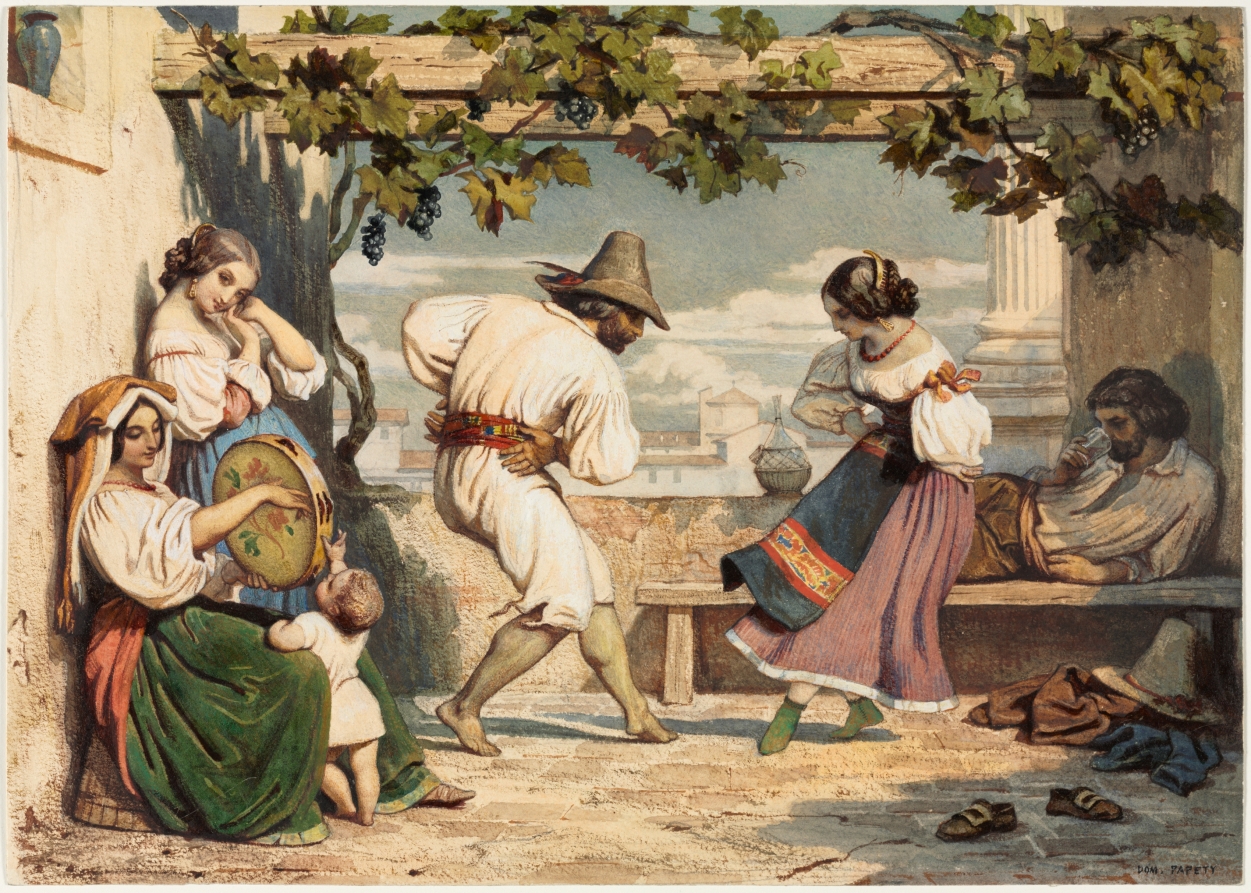
La Saltarelle (1800s) is in the Cleveland Museum of Art collection. The museum's creator attribution is Dominque Louis Papety (French, 1815–1849).
The work and its context
The museum's open-access catalogue describes the work:
During the 15th century, La Saltarelle was a popular Neapolitan court dance named for its particular leaping step, after the Italian verb saltare (to jump). Lively and merry, it was played in a fast triple meter. In the 19th century, the saltarello was featured in the Carnival celebrations preceding Lent in Rome. After witnessing the Roman Carnival of 1831, the German composer Felix Mendelssohn incorporated the dance into the finale of one of his masterpieces, the Italian Symphony.
Object facts
- Title: La Saltarelle
- Date: 1800s
- Creator attribution: Dominque Louis Papety (French, 1815–1849)
- Culture: France, 19th century
- Type: Drawing
- Technique: watercolor and gouache with selective gum glazing over a faint graphite underdrawing
- Dimensions: Sheet: 25.4 x 35.7 cm (10 x 14 1/16 in.)
- Collection: DR - French
- Department: Drawings
- Accession number: 2010.171
Collection credit
Bequest of Muriel Butkin
Further reading listed by the museum
- Fine Arts Paris 2026. Exh. cat. Paris: De Bayser, 2026.
View the collection record
See the museum's photographs and full catalogue entry. Catalogue text is reproduced from the Cleveland Museum of Art's open-access data, with HTML formatting removed. This object and its supplied image are designated CC0.
Sources
More in Lifestyle
Keep reading