Lace Towel End (c. 1700s–1800s): Art, History and Details
Lace Towel End at the Cleveland Museum of Art: c. 1700s–1800s, cotton or linen (est.); straight (continuous) bobbin lace (Vologda tape lace). The tape forms figural or plants motifs outlined with gimp (heavy cord) with a polychrome plaited
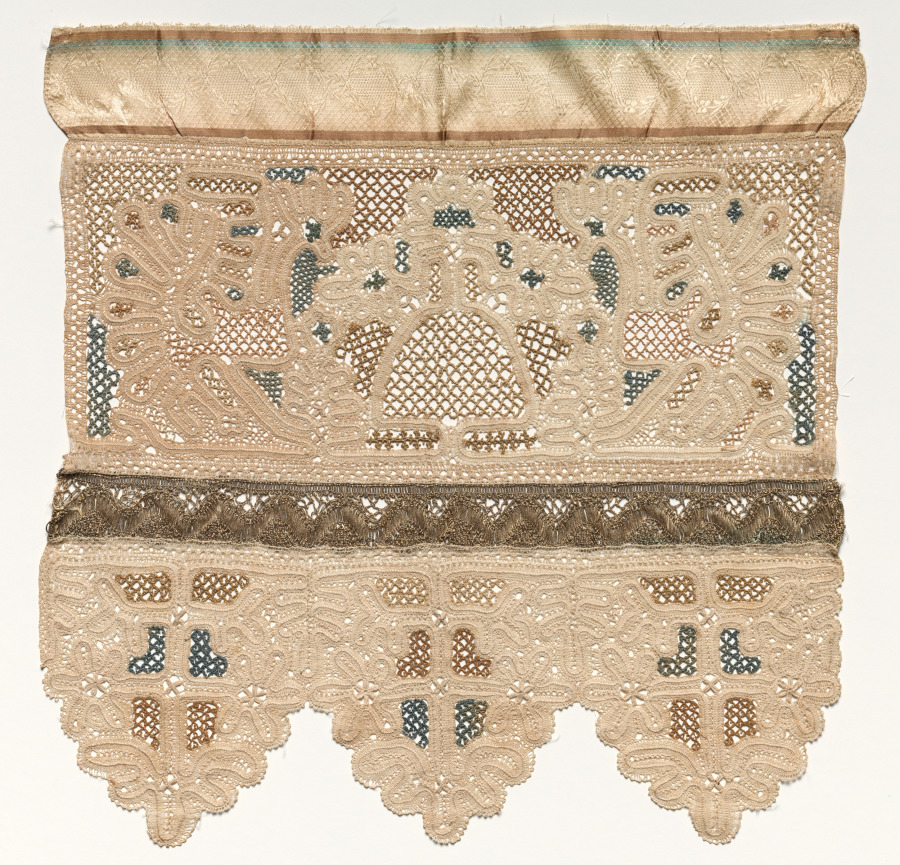
Lace Towel End (c. 1700s–1800s) is in the Cleveland Museum of Art collection.
The work and its context
The museum's open-access catalogue describes the work:
This Russian lace panel was likely used to embellish the end of a bathing towel. Textiles of this type are valuable for their fine lace making including ancient folk motifs, ritual significance, exemplification of the role of textiles in their society, and in this case, connection to a prominent woman collector, Natalia de Shabelsky, without whom this textile and others like it might have been lost.
Object facts
- Title: Lace Towel End
- Date: c. 1700s–1800s
- Culture: Russia, Nizhny-Novgorod province
- Type: Embroidery
- Technique: cotton or linen (est.); straight (continuous) bobbin lace (Vologda tape lace). The tape forms figural or plants motifs outlined with gimp (heavy cord) with a polychrome plaited ground linking the tape; applied silk (est.) ribbon and metal thread trim
- Dimensions: Overall: 45.7 x 42.9 cm (18 x 16 7/8 in.)
- Collection: T - Lace
- Department: Textiles
- Accession number: 1931.110
A detail from the museum
Embellishing the ends of everyday towels was a common folk tradition in many cultures because it displayed the skill of the mother or daughter who made this lace.
Collection credit
Purchase from the J. H. Wade Fund
Further reading listed by the museum
- Pushkin, B. M, B. M Pushkin, N. de Shabelsky, and N. de Shabelsky. Exhibition of National Russian Art, 17th, 18th and Early 19th Centuries: Peasant Embroideries, Costumes, Headdresses, Hand-Woven Materials, Laces, Ikons, Articles of Silver, Copper, Etc.: Shown by Count and Countess B.m.-Pushkin. Place of publication not identified: publisher not identified, 1900.
- Valance, Aymer. "Russian Peasant Industries." The studio: an illustrated magazine of fine and applied art. London: Offices of the Studio, 1893-1964. volume 37, 1906.
- Sidamon-Eristoff, V. P., Princess. Sobranīe russkoĭ stariny Kn. V.P. Sidamon-Ėristovoĭ i N.P. Shabelʹskoĭ: vypusk I-ĭ, vyshivki i kruzheva = Antiquités russes, collection princesse Sidamon-Eristoff et Mlle. N. de Schabelskoi. Moskva, 1910.
View the collection record
See the museum's photographs and full catalogue entry. Catalogue text is reproduced from the Cleveland Museum of Art's open-access data, with HTML formatting removed. This object and its supplied image are designated CC0.
Sources
More in Lifestyle
Keep reading