Laurel: James I (obverse); Shield of Arms (reverse) (1619–1620): Art, History and Details
Laurel: James I (obverse); Shield of Arms (reverse) at the Cleveland Museum of Art: 1619–1620, gold. Explore the work's context, creator attribution and collection history.
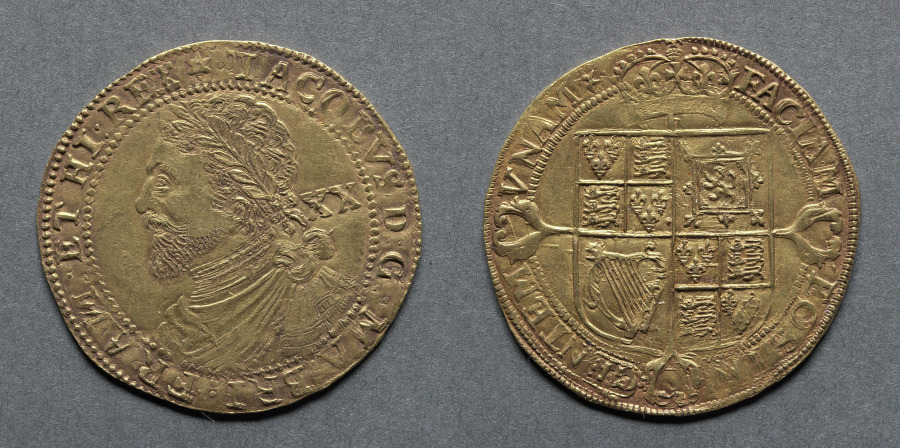
Laurel: James I (obverse); Shield of Arms (reverse) (1619–1620) is in the Cleveland Museum of Art collection.
The work and its context
The museum's open-access catalogue describes the work:
In 1611 the value of all gold coins, which had previously been down-rated, was now raised by ten percent. Previously the gold coins had circulated at inconvenient fractional values, such as 33 shilling; 16 shillings and 6 pence; 4 shillings and 4 pence three farthings; and so forth. To obviate this a new unit of 20 shillings value was introduced, of which this is a specimen. Showing the king wearing a laurel wreath, it quickly became known as a "Laurel."
Object facts
- Title: Laurel: James I (obverse); Shield of Arms (reverse)
- Date: 1619–1620
- Culture: England, James I, 1603-1625
- Type: Coins
- Technique: gold
- Dimensions: Diameter: 3.7 cm (1 7/16 in.)
- Collection: MED - Numismatics
- Department: Medieval Art
- Accession number: 1969.191
A detail from the museum
The king is shown dressed as a Roman Emperor wearing armor.
Collection credit
The Norweb Collection
Further reading listed by the museum
- Cleveland Museum of Art, and Emery May Norweb. English Gold Coins, Ancient to Modern Times, On Loan to the Cleveland Museum of Art from the Norweb Collection. [Catalog. 1968.
View the collection record
See the museum's photographs and full catalogue entry. Catalogue text is reproduced from the Cleveland Museum of Art's open-access data, with HTML formatting removed. This object and its supplied image are designated CC0.
Sources
More in Lifestyle
Keep reading