Leaf from a Qur'an (verso) (1300s): Art, History and Details
Leaf from a Qur'an (verso) at the Cleveland Museum of Art: 1300s, ink, gold, color on pink paper. Explore the work's context, creator attribution and collection history.
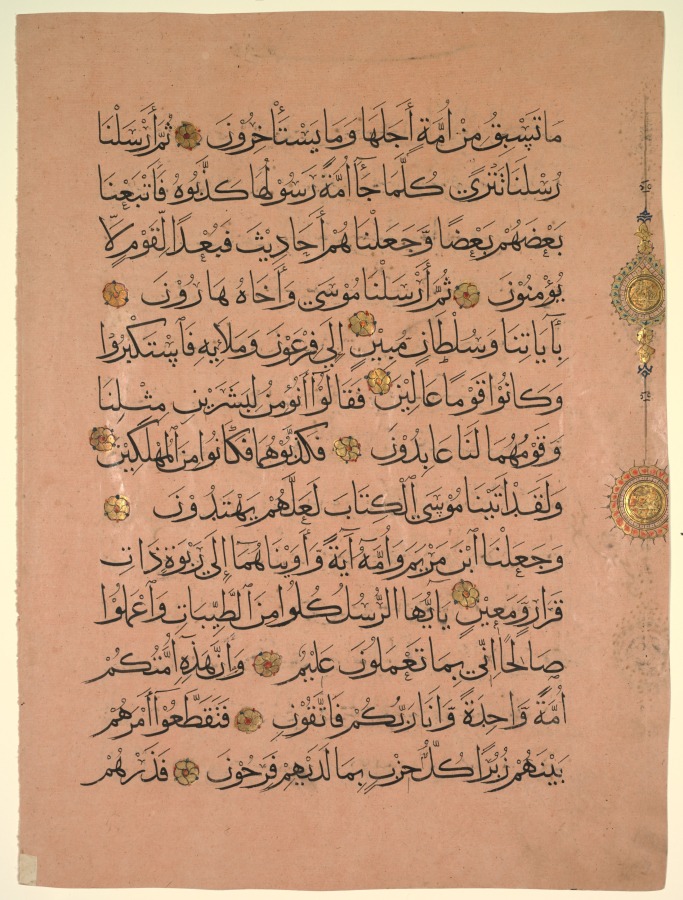
Leaf from a Qur'an (verso) (1300s) is in the Cleveland Museum of Art collection.
The work and its context
The museum's open-access catalogue describes the work:
It is through the Arabic language that the Qur’an was revealed to the Prophet Muhammad in the 600s. As a result, calligraphy is celebrated as the highest form in Islamic art. This page shows 13 lines from the Qur’an in muhaqqa script, one of the six main script types of Arabic calligraphy. The Qur’an’s importance explains the significance of calligraphy; however, the latter was not restricted to just religious texts. Many objects in the Islamic art gallery bear calligraphic inscriptions and come from secular contexts, displaying the versatility and creativity of this art form.
Object facts
- Title: Leaf from a Qur'an (verso)
- Date: 1300s
- Culture: Egypt, Cairo, Mamluk Sultanate (1250–1517)
- Type: Manuscript
- Technique: ink, gold, color on pink paper
- Dimensions: Sheet: 45 x 33 cm (17 11/16 x 13 in.)
- Collection: Islamic Art
- Department: Islamic Art
- Accession number: 2013.102.b
Collection credit
Gift of Donna L. and Robert H. Jackson
View the collection record
See the museum's photographs and full catalogue entry. Catalogue text is reproduced from the Cleveland Museum of Art's open-access data, with HTML formatting removed. This object and its supplied image are designated CC0.
Sources
More in Lifestyle
Keep reading