Lepcha Woman (number 1908) (c. 1863–70): Art, History and Details
Lepcha Woman (number 1908) at the Cleveland Museum of Art: c. 1863–70, albumen print from wet collodion negative. Explore the work's context, creator attribution and collection history.
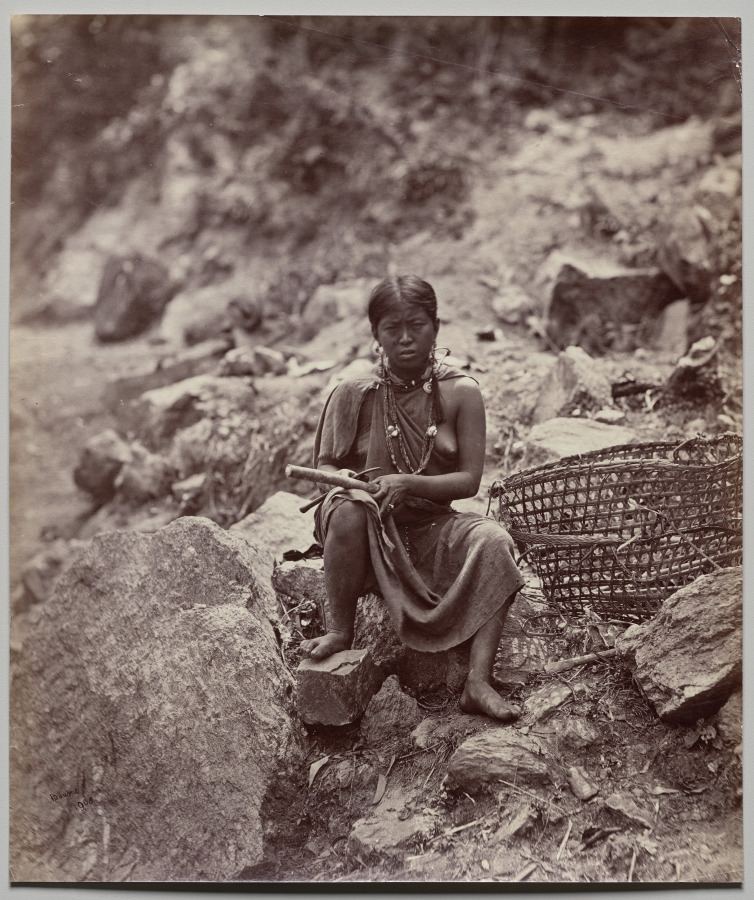
Lepcha Woman (number 1908) (c. 1863–70) is in the Cleveland Museum of Art collection. The museum's creator attribution is Samuel Bourne (British, 1834–1912).
The work and its context
The museum's open-access catalogue describes the work:
One of the most versatile and widely traveled early photographers of India was Samuel Bourne, recognized in his time and now for superb technical skills and artistic talent. While his predominant subject matters were landscape and architectural views, Bourne sometimes photographed the types of people he encountered on his travels throughout India.
Object facts
- Title: Lepcha Woman (number 1908)
- Date: c. 1863–70
- Creator attribution: Samuel Bourne (British, 1834–1912)
- Culture: England, 19th century
- Type: Photograph
- Technique: albumen print from wet collodion negative
- Dimensions: Image: 27.5 x 23.2 cm (10 13/16 x 9 1/8 in.); Paper: 27.5 x 23.2 cm (10 13/16 x 9 1/8 in.)
- Collection: PH - British 19th Century
- Department: Photography
- Accession number: 2019.55
A detail from the museum
The Lepcha people, also called the Rongkup, are indigenous to Sikkim, Darjeeling, and West Bengal in India, and to areas of Nepal and Bhutan.
Collection credit
Photography Discretionary Fund
View the collection record
See the museum's photographs and full catalogue entry. Catalogue text is reproduced from the Cleveland Museum of Art's open-access data, with HTML formatting removed. This object and its supplied image are designated CC0.
Sources
More in Lifestyle
Keep reading