Les cariatides du Ramesseum 134 (1860–80s): Art, History and Details
Les cariatides du Ramesseum 134 at the Cleveland Museum of Art: 1860–80s, albumen print. Explore the work's context, creator attribution and collection history.
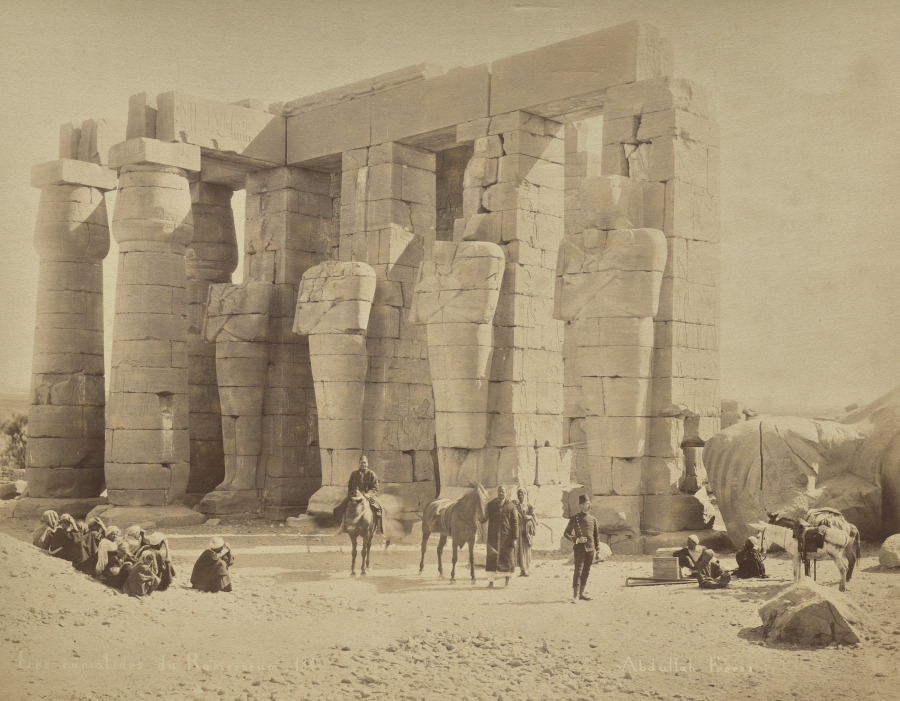
Les cariatides du Ramesseum 134 (1860–80s) is in the Cleveland Museum of Art collection. The museum's creator attribution is Abdullah Frères (Turkish, 1858–1899).
The work and its context
The museum's open-access catalogue describes the work:
This photograph of the ruins of the memorial temple of Egyptian pharaoh Ramesses the Great was produced by Abdullah Frères, a studio run by three brothers. Based in Istanbul, it was the most celebrated photographic studio in the Ottoman Empire. This depiction of the sculptures of Osiris and the pharaoh echoes and complements views of these sculptures by British photographer Francis Frith (1992.236) and French photographers Henri Béchard (2006.118) and Adolphe Braun (1992.244).
Object facts
- Title: Les cariatides du Ramesseum 134
- Date: 1860–80s
- Creator attribution: Abdullah Frères (Turkish, 1858–1899)
- Culture: Turkey
- Type: Photograph
- Technique: albumen print
- Collection: PH - Misc. 19th Century
- Department: Photography
- Accession number: 2023.131
A detail from the museum
While Britain maintained a significant military and commercial presence in Egypt in the nineteenth century, the country was ruled by the Ottoman Empire.
Collection credit
Gift of Leslie and Donald O’Bell
View the collection record
See the museum's photographs and full catalogue entry. Catalogue text is reproduced from the Cleveland Museum of Art's open-access data, with HTML formatting removed. This object and its supplied image are designated CC0.
Sources
More in Lifestyle
Keep reading