Li, Hollow-Legged Tripod (1200–800 BCE): Art, History and Details
Li, Hollow-Legged Tripod at the Cleveland Museum of Art: 1200–800 BCE, dark gray earthenware. Explore the work's context, creator attribution and collection history.
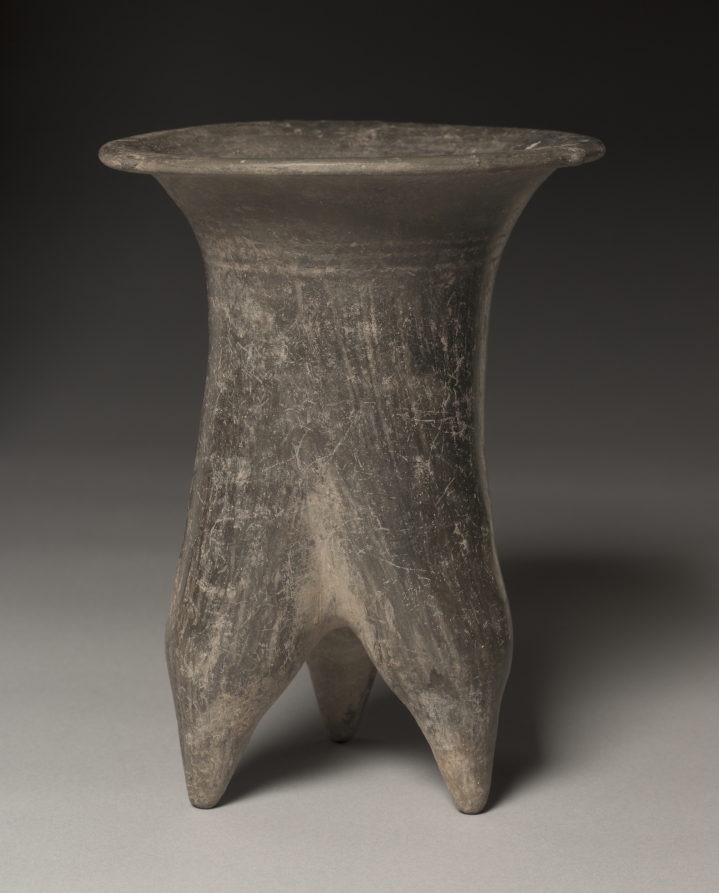
Li, Hollow-Legged Tripod (1200–800 BCE) is in the Cleveland Museum of Art collection.
The work and its context
The museum's open-access catalogue describes the work:
This pottery li tripod—which was originally used as a cooking vessel—belongs to the lower stratum of the Xiajiadian culture that flourished in northeast China. Comparable examples with similar shape and proportion have been excavated in Inner Mongolia. A ceramic shape invented and borrowed from central China, li tripod appeared at a later date in the northeast, with limited examples from the late Neolithic period. As an artifact representative of the lower Xiajiadian culture—which was contemporary with the Shang dynasty in central China where bronze production had already been highly developed—pottery li tripod was popular in the northeast during the Bronze Age and was widely spread from the Liaodong to the Liaoxi regions, including Inner Mongolia.
Object facts
- Title: Li, Hollow-Legged Tripod
- Date: 1200–800 BCE
- Culture: China, Inner Mongolia, lower stratum of the Xiajiadian culture (2200–1600 BCE)
- Type: Ceramic
- Technique: dark gray earthenware
- Dimensions: Overall: 22.9 x 17 cm (9 x 6 11/16 in.)
- Collection: China - Neolithic
- Department: Chinese Art
- Accession number: 2005.20
A detail from the museum
This vessel not only reveals an interesting relationship between ceramic and bronze shapes but also the cultural impact of central China on the border regions.
Collection credit
Gift of Mr. and Mrs. Thomas French
View the collection record
See the museum's photographs and full catalogue entry. Catalogue text is reproduced from the Cleveland Museum of Art's open-access data, with HTML formatting removed. This object and its supplied image are designated CC0.
Sources
More in Lifestyle
Keep reading