Lidded Jar (lid) (400s–500s CE): Art, History and Details
Lidded Jar (lid) at the Cleveland Museum of Art: 400s–500s CE, red earthenware with incised band designs. Explore the work's context, creator attribution and collection history.
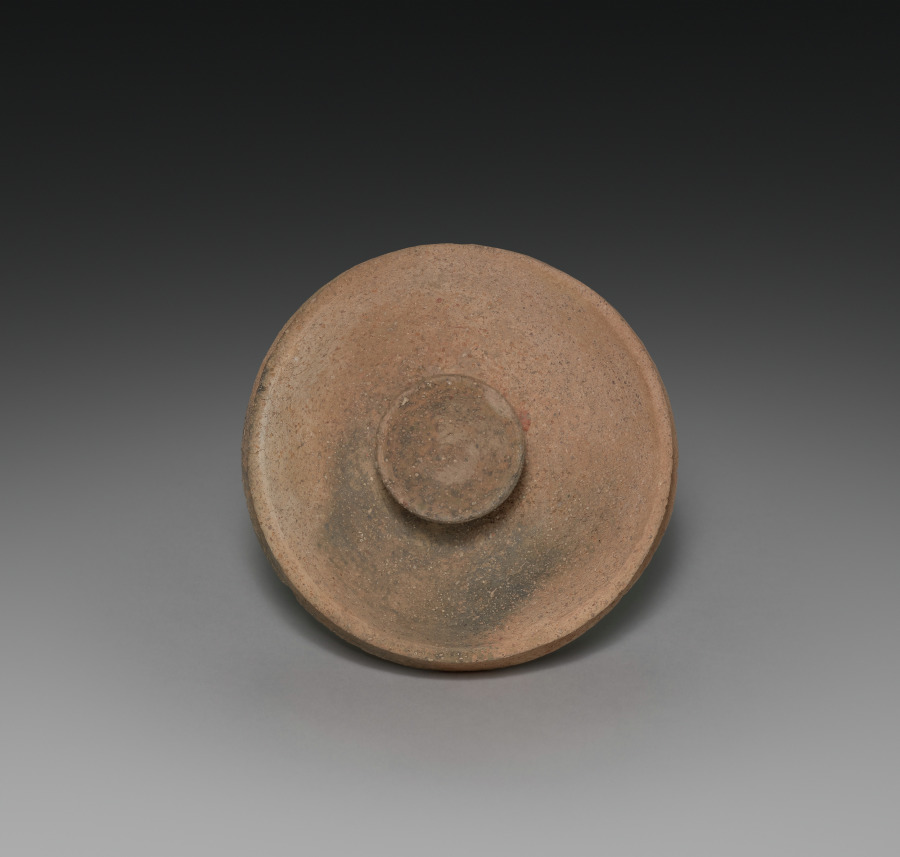
Lidded Jar (lid) (400s–500s CE) is in the Cleveland Museum of Art collection.
The work and its context
The museum's open-access catalogue describes the work:
Early earthenware from the Three Kingdoms period (57 BCE–668 CE) became widely utilized as agriculture and religion grew to be essential elements in sustaining society and its systems. The clay jars of different sizes and shapes on display were made for the following purposes: to store harvested grains and seeds, or, especially lidded ones such as this, to preserve cremated remains, and to serve offerings in rituals.
Object facts
- Title: Lidded Jar (lid)
- Date: 400s–500s CE
- Culture: Korea, Silla (57 BC-935) or Kaya (AD 42-562) period
- Type: Ceramic
- Technique: red earthenware with incised band designs
- Dimensions: Diameter of mouth: 7 cm (2 3/4 in.); Overall: 11 x 12.8 cm (4 5/16 x 5 1/16 in.)
- Collection: Korean Art
- Department: Korean Art
- Accession number: 1997.20.b
A detail from the museum
Closed kilns built on hillsides became widely used for producing this type of pottery vessel in Korea during the Three Kingdoms period.
Collection credit
Gift of the John D. Proctor Foundation
View the collection record
See the museum's photographs and full catalogue entry. Catalogue text is reproduced from the Cleveland Museum of Art's open-access data, with HTML formatting removed. This object and its supplied image are designated CC0.
Sources
More in Lifestyle
Keep reading