Lion (100s–200s CE): Art, History and Details
Lion at the Cleveland Museum of Art: 100s–200s CE, sandstone. Explore the work's context, creator attribution and collection history.
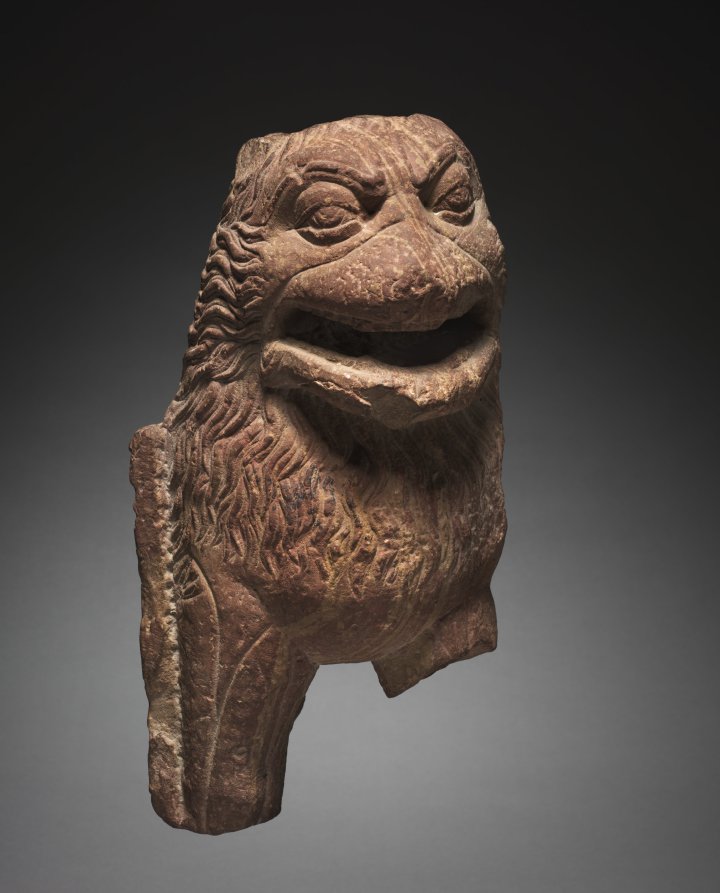
Lion (100s–200s CE) is in the Cleveland Museum of Art collection.
The work and its context
The museum's open-access catalogue describes the work:
Roaring lions such as this have been found on the throne of Kushan kings. Early sculptures of the Buddha also show him seated on a lion throne, and the roar of his teachings (dharma) extends throughout the world.
Object facts
- Title: Lion
- Date: 100s–200s CE
- Culture: Northern India, Uttar Pradesh, Mathura, Kushan period
- Type: Sculpture
- Technique: sandstone
- Dimensions: Overall: 47 cm (18 1/2 in.)
- Collection: Indian Art - Kushan, Mathura
- Department: Indian and Southeast Asian Art
- Accession number: 1952.514
Collection credit
Edward L. Whittemore Fund
Further reading listed by the museum
- Ward, William. "Kushan Lion." The Bulletin of the Cleveland Museum of Art 41, no. 1 (January 1954): 15-16.
- The Cleveland Museum of Art. The Cleveland Museum of Art Handbook. Cleveland, OH: The Cleveland Museum of Art, 1958.
- The Cleveland Museum of Art. Handbook of the Cleveland Museum of Art/1966. Cleveland, OH: The Cleveland Museum of Art, 1966.
View the collection record
See the museum's photographs and full catalogue entry. Catalogue text is reproduced from the Cleveland Museum of Art's open-access data, with HTML formatting removed. This object and its supplied image are designated CC0.
Sources
More in Lifestyle
Keep reading