Lioness (c. 2100 BCE): Art, History and Details
Lioness at the Cleveland Museum of Art: c. 2100 BCE, copper alloy, lost-wax cast. Explore the work's context, creator attribution and collection history.
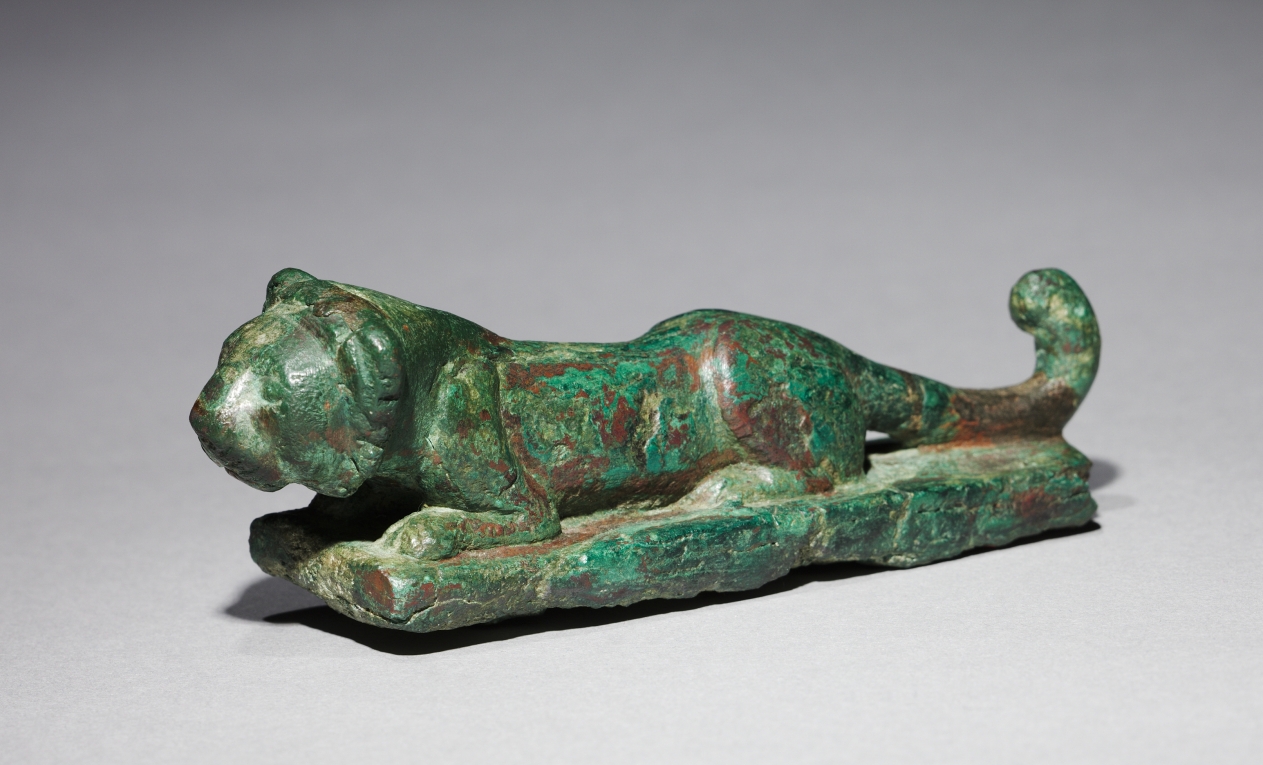
Lioness (c. 2100 BCE) is in the Cleveland Museum of Art collection.
The work and its context
The museum's open-access catalogue describes the work:
Crouched in the stance of a hunter stalking its prey, this diminutive lioness possesses the latent power of a predator about to strike. In the ancient Near East, the ferocity and strength of lions was often associated with rulers and gods through symbolic imagery.
Object facts
- Title: Lioness
- Date: c. 2100 BCE
- Culture: Sumerian, Iraq
- Type: Sculpture
- Technique: copper alloy, lost-wax cast
- Dimensions: Overall: 4.2 x 3.1 x 13.3 cm (1 5/8 x 1 1/4 x 5 1/4 in.)
- Collection: Near Eastern Art
- Department: Egyptian and Ancient Near Eastern Art
- Accession number: 1989.253
A detail from the museum
The fierce and powerful nature of lions was often associated with rulers through symbolic imagery.
Collection credit
Bequest of Mrs. Severance A. Millikin
View the collection record
See the museum's photographs and full catalogue entry. Catalogue text is reproduced from the Cleveland Museum of Art's open-access data, with HTML formatting removed. This object and its supplied image are designated CC0.
Sources
More in Lifestyle
Keep reading