Lions from a Tunic (c. 800's): Art, History and Details
Lions from a Tunic at the Cleveland Museum of Art: c. 800's, tapestry weave with supplementary weft wrapping; undyed linen and dyed wool. Explore the work's context, creator attribution and collection history.
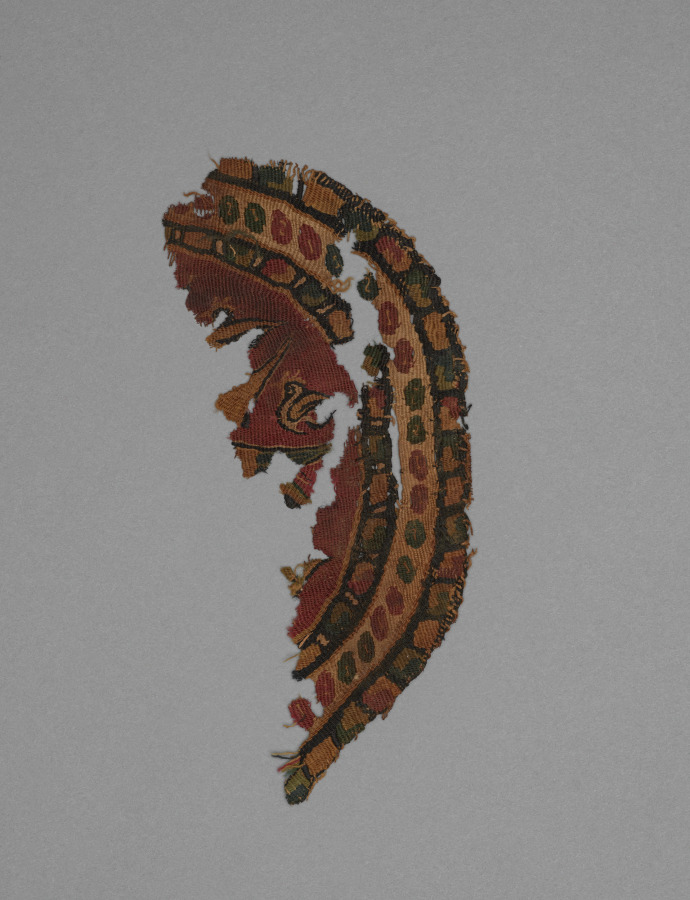
Lions from a Tunic (c. 800's) is in the Cleveland Museum of Art collection.
The work and its context
The museum's open-access catalogue describes the work:
The royal lions and jeweled border in this colorful roundel, originally from a tunic, conveyed power and wealth. The symmetrical design with lions and ducks flanking the central palmette (fan-shaped plant form) indicates that the pattern was copied from a costlier silk textile woven on a loom that automatically repeated the design in mirror-image symmetry.
Object facts
- Title: Lions from a Tunic
- Date: c. 800's
- Culture: Egypt, Islamic Abbasid period, 8th - 9th Century
- Type: Textile
- Technique: tapestry weave with supplementary weft wrapping; undyed linen and dyed wool
- Dimensions: Overall: 20.1 x 9 cm (7 15/16 x 3 9/16 in.)
- Collection: T - Coptic
- Department: Textiles
- Accession number: 1982.83.b
Collection credit
Andrew R. and Martha Holden Jennings Fund
View the collection record
See the museum's photographs and full catalogue entry. Catalogue text is reproduced from the Cleveland Museum of Art's open-access data, with HTML formatting removed. This object and its supplied image are designated CC0.
Sources
More in Lifestyle
Keep reading
Related stories