Lot and His Daughters (1530): Art, History and Details
Lot and His Daughters at the Cleveland Museum of Art: 1530, engraving. Explore the work's context, creator attribution and collection history.
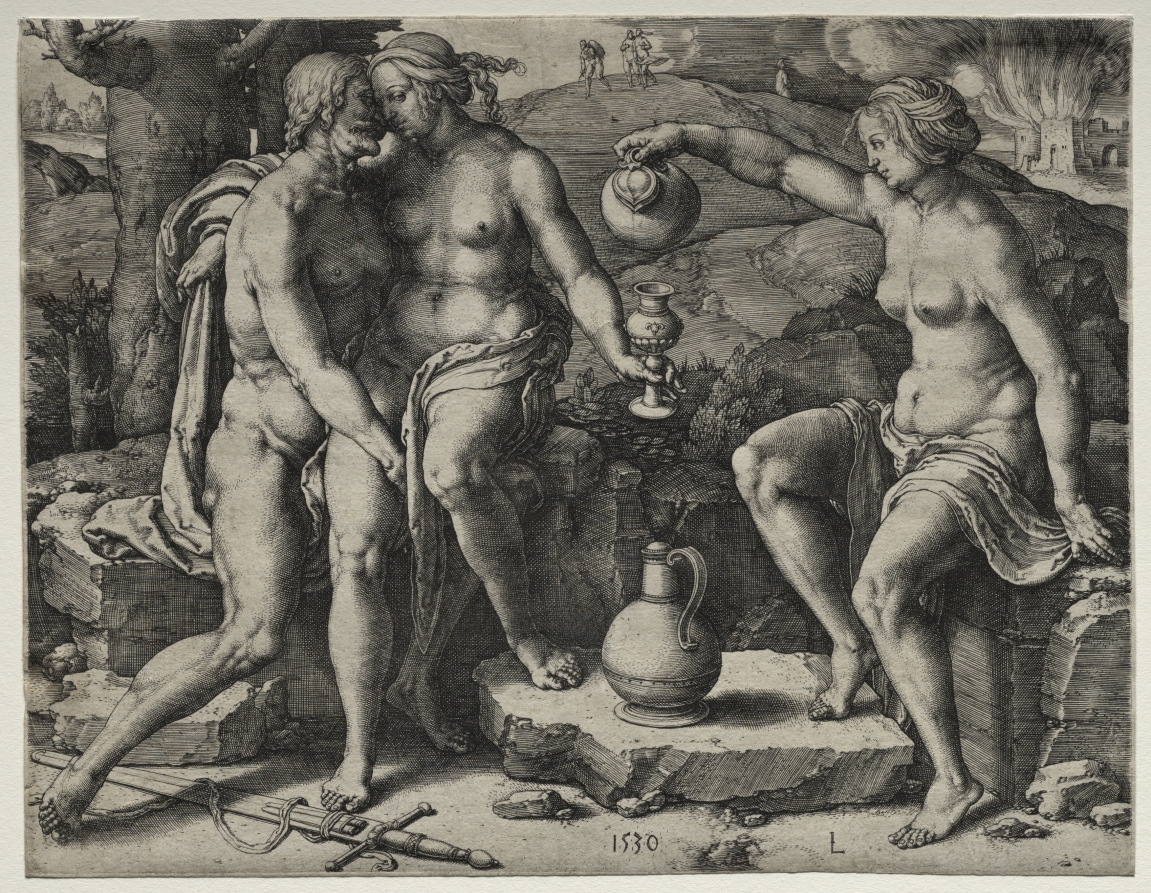
Lot and His Daughters (1530) is in the Cleveland Museum of Art collection. The museum's creator attribution is Lucas van Leyden (Netherlandish, 1494–about 1533).
The work and its context
The museum's open-access catalogue describes the work:
Few Old Testament stories are more morally charged than that of Lot and his daughters. After fleeing the city of Sodom, Lot’s wife disobeyed God and looked back at the city and was turned into a pillar of salt. Believing that they were the last humans on earth, Lot’s two daughters conspired to intoxicate their father with wine to conceive children with him. Lucas van Leyden’s interpretation takes license with the episode’s moral impropriety, doubling down on its erotic content by showing the daughters as naked temptresses and Lot, much younger than described, overwhelmed with desire.
Object facts
- Title: Lot and His Daughters
- Date: 1530
- Creator attribution: Lucas van Leyden (Netherlandish, 1494–about 1533)
- Culture: Netherlands, 16th century
- Type: Print
- Technique: engraving
- Dimensions: Sheet: 18.8 x 24.4 cm (7 3/8 x 9 5/8 in.)
- Collection: PR - Engraving
- Department: Prints
- Accession number: 1944.26
A detail from the museum
The middle ground of this image depicts Lot leaving behind the salt-pillar figure of his wife with his two daughters trailing behind him. The nakedness of the figures and Lot's dejected posture echo representations of Adam and Eve being expelled from paradise.
Collection credit
Mr. and Mrs. Lewis B. Williams Collection
View the collection record
See the museum's photographs and full catalogue entry. Catalogue text is reproduced from the Cleveland Museum of Art's open-access data, with HTML formatting removed. This object and its supplied image are designated CC0.
Sources
More in Lifestyle
Keep reading