Lower Section of a Tunic (400s CE): Art, History and Details
Lower Section of a Tunic at the Cleveland Museum of Art: 400s CE, Undyed linen and dyed wool: tapestry weave with supplementary weft wrapping. Explore the work's context, creator attribution and collection history.
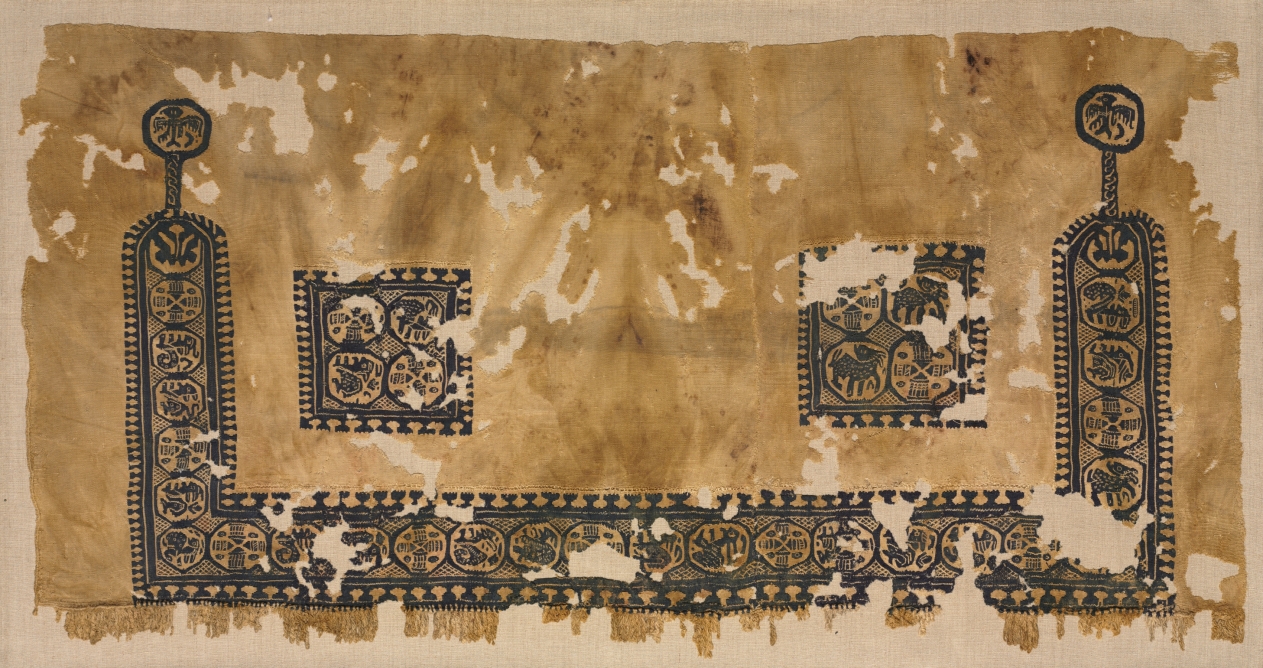
Lower Section of a Tunic (400s CE) is in the Cleveland Museum of Art collection.
The work and its context
The museum's open-access catalogue describes the work:
This is the bottom section of a well-woven wool unisex tunic. Various stylized roundels with animals and baskets decorate the hem that extends into round finials with birds. The interior two square panels complete the design. Extra wefts, or horizontal threads, enrich the animals and the deep blue ground, probably a failed purple dye. While the robe itself is created from linen, the fringes at the bottom are made from wool.
Object facts
- Title: Lower Section of a Tunic
- Date: 400s CE
- Culture: Egypt, Byzantine period
- Type: Textile
- Technique: Undyed linen and dyed wool: tapestry weave with supplementary weft wrapping
- Dimensions: Overall: 54.9 x 106.7 cm (21 5/8 x 42 in.); Mounted: 67.3 x 118.1 cm (26 1/2 x 46 1/2 in.)
- Collection: T - Coptic
- Department: Textiles
- Accession number: 1993.177
A detail from the museum
Long wide tunics were the most common garments of this time period.
Collection credit
Gift of William E. Ward in memory of his wife, Evelyn Svec Ward
Further reading listed by the museum
- “1993 Annual Report.” The Bulletin of the Cleveland Museum of Art 81, no. 6 (1994).
View the collection record
See the museum's photographs and full catalogue entry. Catalogue text is reproduced from the Cleveland Museum of Art's open-access data, with HTML formatting removed. This object and its supplied image are designated CC0.
Sources
More in Lifestyle
Keep reading