Luster Bowl with Ibex (1000s): Art, History and Details
Luster Bowl with Ibex at the Cleveland Museum of Art: 1000s, earthenware with luster-painted design. Explore the work's context, creator attribution and collection history.
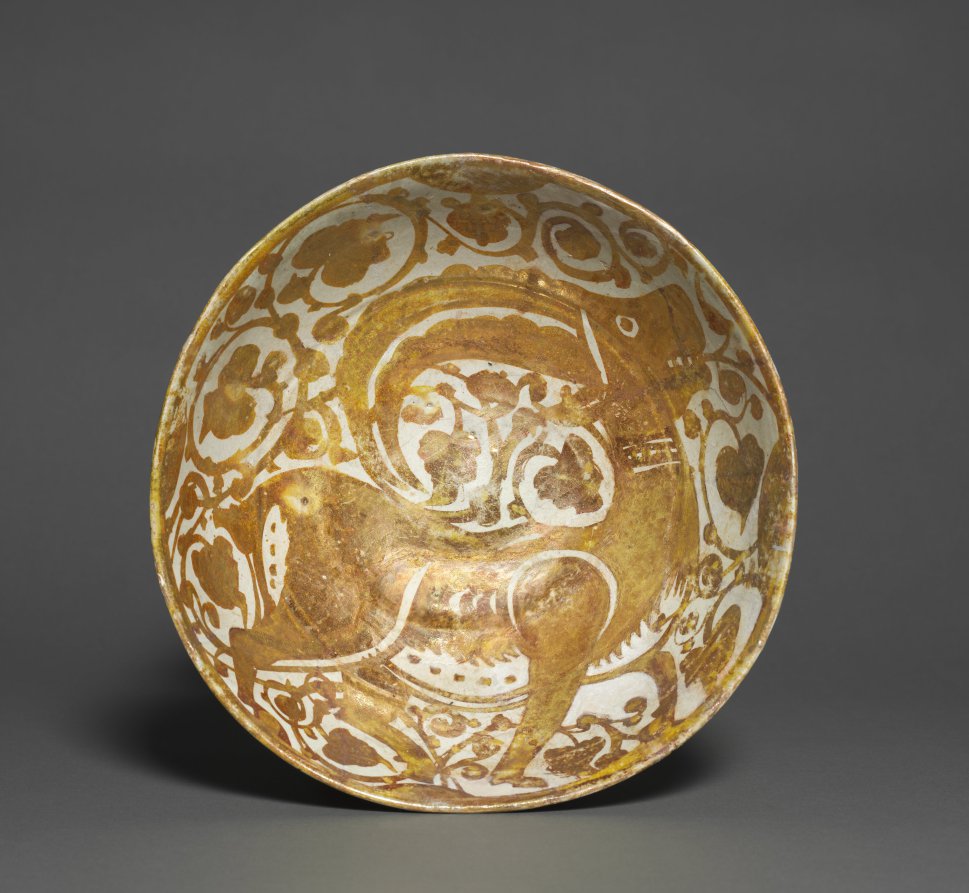
Luster Bowl with Ibex (1000s) is in the Cleveland Museum of Art collection.
The work and its context
The museum's open-access catalogue describes the work:
The expensive and unpredictable luster technique was transmitted by Iraqi potters to the more prosperous Fatimid court in Cairo where it flourished from around 1000 until about 1171.
Object facts
- Title: Luster Bowl with Ibex
- Date: 1000s
- Culture: Egypt, Fustat (Old Cairo), Fatimid period (909–1171)
- Type: Ceramic
- Technique: earthenware with luster-painted design
- Dimensions: Overall: 9.6 x 24.7 cm (3 3/4 x 9 3/4 in.)
- Collection: Islamic Art
- Department: Islamic Art
- Accession number: 1944.477
A detail from the museum
Lusterware seems to have been a secret process, confined to a small number of craftsmen.
Collection credit
Purchase from the J. H. Wade Fund
Further reading listed by the museum
- Cox, Warren E. The Book of Pottery and Porcelain. New York: L. Lee and Shepard Co.; distributed by Crown Publishers, 1944.
- Hollis, Howard. “Two Fusṭāṭ Bowls.” The Bulletin of the Cleveland Museum of Art, vol. 32, no. 6, 1945, pp. 92, 94–95.
- Graves Margaret S. "Matter Transformed: The Wondrous Arts of Fire and Earth." In Wonders of Creation: Art, Science, and Innovation in the Islamic World, edited by Ladan Akbarnia, 167–183. San Diego: The San Diego Museum of Art, 2025.
View the collection record
See the museum's photographs and full catalogue entry. Catalogue text is reproduced from the Cleveland Museum of Art's open-access data, with HTML formatting removed. This object and its supplied image are designated CC0.
Sources
More in Lifestyle
Keep reading