Lyre (ndongo, endongo, entongoli, or kissar) (by 1928): Art, History and Details
Lyre (ndongo, endongo, entongoli, or kissar) at the Cleveland Museum of Art: by 1928, Wood, reptile skin, pelt, cloth, and natural fiber. Explore the work's context, creator attribution and collection history.
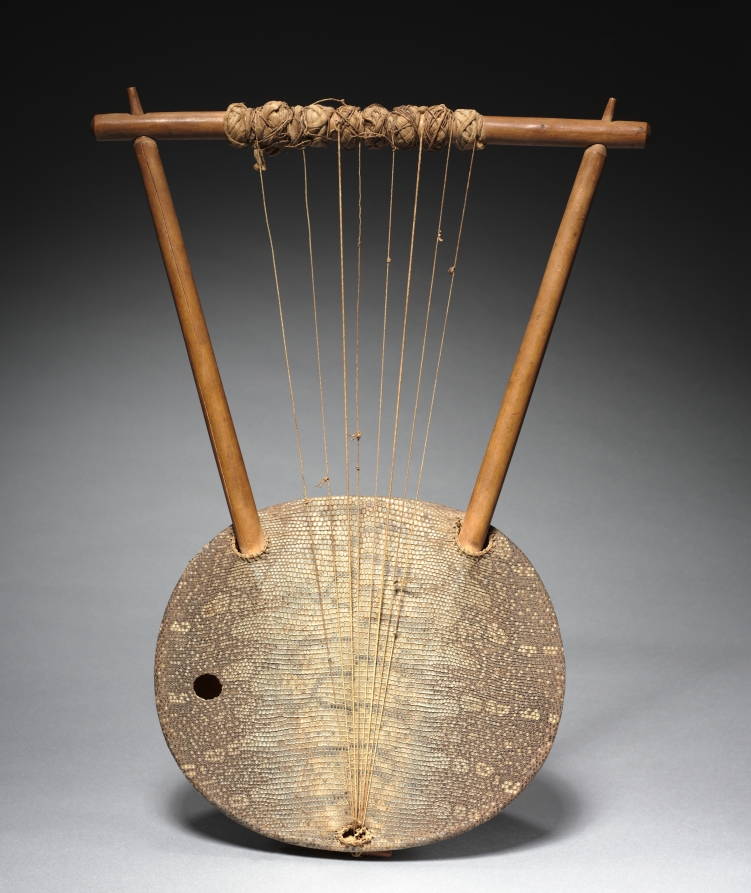
Lyre (ndongo, endongo, entongoli, or kissar) (by 1928) is in the Cleveland Museum of Art collection.
The work and its context
The museum's open-access catalogue describes the work:
Lyres are common instruments across eastern Africa. The many names––endongo, ndongo, kissar, or entongoli—reflect how many different groups use this Ugandan type. This example is made from a wooden bowl-shaped sound box covered in the skin of a reptile, possibly a monitor lizard. The strings lead up to a crossbar once decorated with goat hair tassels at each end and sometimes cowrie shells.
Object facts
- Title: Lyre (ndongo, endongo, entongoli, or kissar)
- Date: by 1928
- Culture: Africa, East Africa, Uganda, Ganda or Soga style, unknown maker
- Type: Musical Instrument
- Technique: Wood, reptile skin, pelt, cloth, and natural fiber
- Dimensions: Diameter: 31.8 cm (12 1/2 in.); Overall: 43.2 cm (17 in.)
- Collection: African Art
- Department: African Art
- Accession number: 1929.346
A detail from the museum
Imagine the buzzing, resonant sound that this string instrument would make.
Collection credit
Gift of the African Art Sponsors of Karamu House
View the collection record
See the museum's photographs and full catalogue entry. Catalogue text is reproduced from the Cleveland Museum of Art's open-access data, with HTML formatting removed. This object and its supplied image are designated CC0.
Sources
More in Lifestyle
Keep reading