Maharaja of Kotah Listening to Music and Watching Dancers (c. 1820): Art, History and Details
Maharaja of Kotah Listening to Music and Watching Dancers at the Cleveland Museum of Art: c. 1820, Gum tempera, ink, and gold on paper. Explore the work's context, creator attribution and collection history.
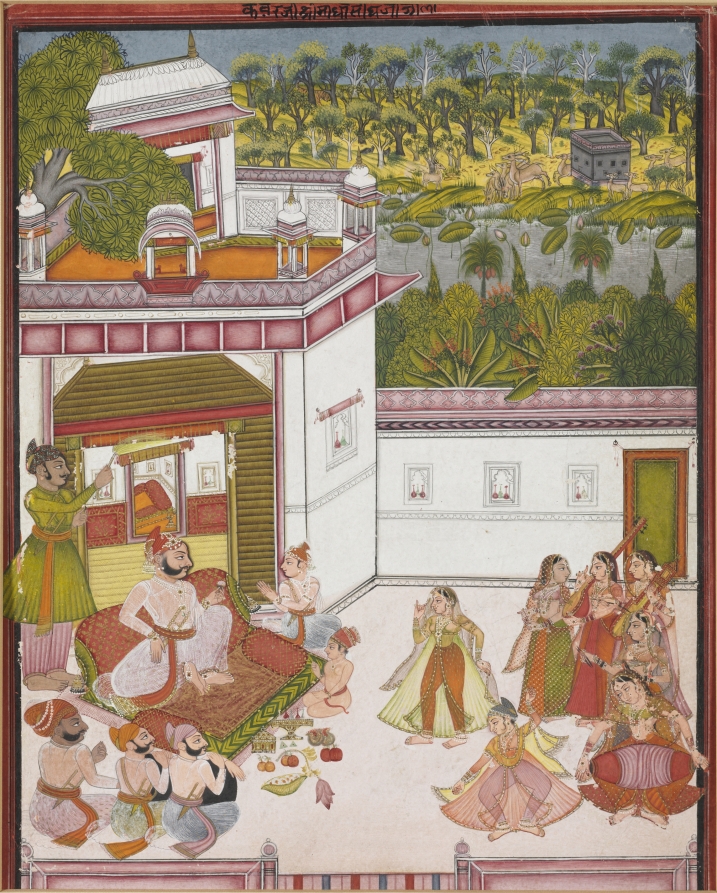
Maharaja of Kotah Listening to Music and Watching Dancers (c. 1820) is in the Cleveland Museum of Art collection.
The work and its context
The museum's open-access catalogue describes the work:
In the foreground the king enjoys food, wine, and a dance performance with his companions on the terrace of a palace residence. His hunting lodge is on the opposite bank of the river. Deer, wild boar, and the coveted tiger roam the forested wilderness. Rulers of the princely state of Kota adopted many architectural and costume elements from their overlords, the Mughal emperors. The mix of white marble and pink sandstone with rooftop pavilions and niches in the walls are typical of domestic architecture under the Mughals of India. By the early 1800s, Indian artists adopted an interest in conveying a sense of receding space from European paintings. This painter has convincingly rendered the space of the room behind the king, featuring a door to an inner bedchamber.
Object facts
- Title: Maharaja of Kotah Listening to Music and Watching Dancers
- Date: c. 1820
- Culture: India, Kotah school, early 19th Century
- Type: Painting
- Technique: Gum tempera, ink, and gold on paper
- Dimensions: Image: 33.3 x 25.3 cm (13 1/8 x 9 15/16 in.); Paper: 35.4 x 27.2 cm (13 15/16 x 10 11/16 in.)
- Collection: Indian Art
- Department: Indian and Southeast Asian Art
- Accession number: 2008.297
Collection credit
Gift of Norman Zaworski
View the collection record
See the museum's photographs and full catalogue entry. Catalogue text is reproduced from the Cleveland Museum of Art's open-access data, with HTML formatting removed. This object and its supplied image are designated CC0.
Sources
More in Lifestyle
Keep reading