Makaras, Phoenixes and Flowers (1200s): Art, History and Details
Makaras, Phoenixes and Flowers at the Cleveland Museum of Art: 1200s, lampas, silk and gold thread. Explore the work's context, creator attribution and collection history.
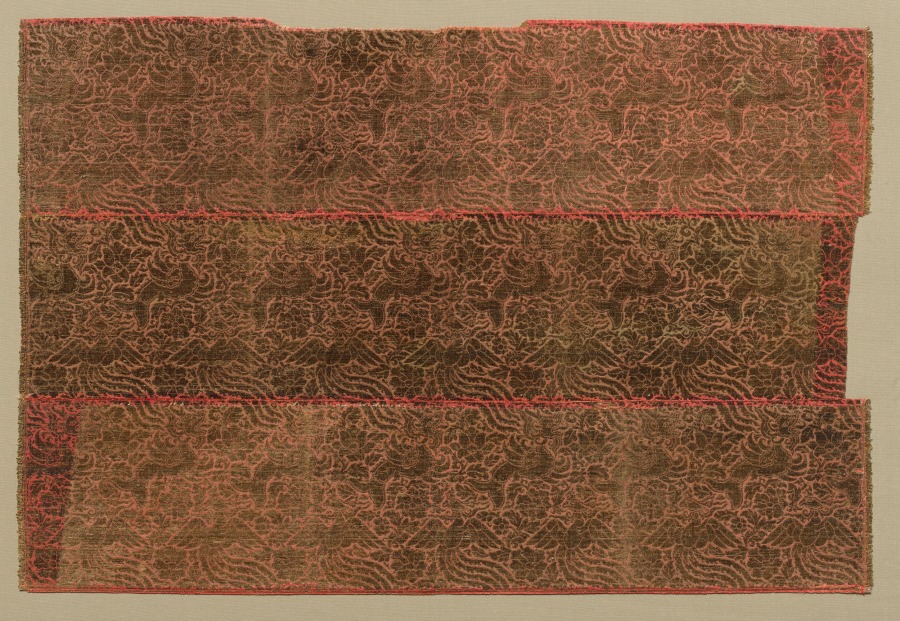
Makaras, Phoenixes and Flowers (1200s) is in the Cleveland Museum of Art collection.
The work and its context
The museum's open-access catalogue describes the work:
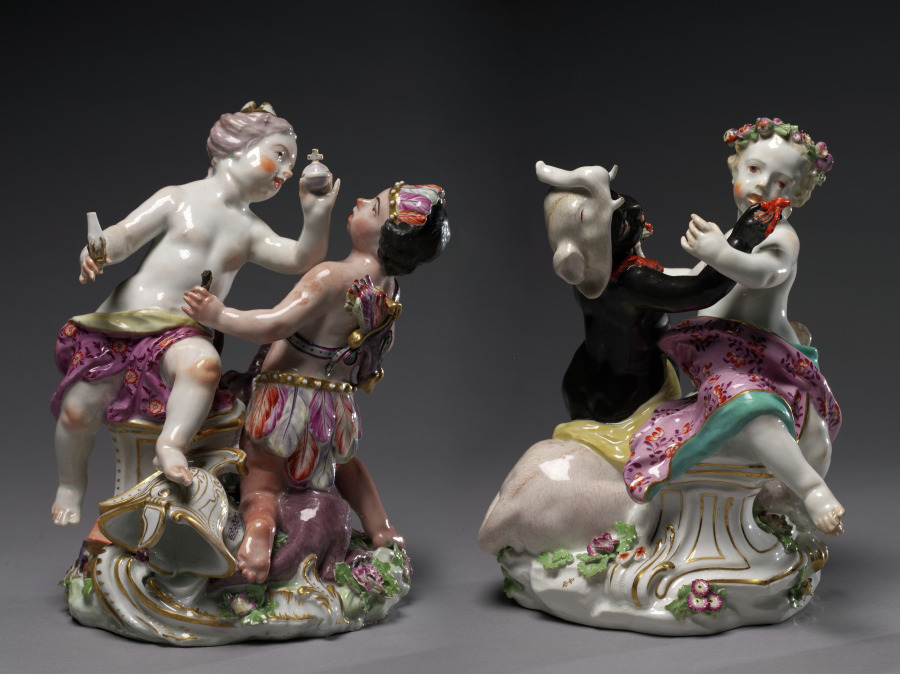
Central Asian designers drew from a wide variety of motifs, both imaginary and real. In this silk, rows of soaring phoenixes alternate with rows of makaras. Combining a fish body and tail, wings, and a dragon's head, the makara originated in India as a water creature. With the spread of Buddhism, the motif migrated into the art of Central Asia and, from there, into the art of northern China. In Italy, exotic Central Asian patterns such as this inspired flights of imagination. One such example (seen in the photograph below) shows a creature, strikingly similar to the makara, spewing forth a dragon while a dog walks up its back.
Object facts
- Title: Makaras, Phoenixes and Flowers
- Date: 1200s
- Culture: Central Asia or Daidu, 13th century
- Type: Textile
- Technique: lampas, silk and gold thread
- Dimensions: Overall: 51.3 x 75.6 cm (20 3/16 x 29 3/4 in.)
- Collection: Textiles
- Department: Textiles
- Accession number: 1991.5
Collection credit
Purchase from the J. H. Wade Fund
Further reading listed by the museum
- Wardwell, Anne E. "Two Silk and Gold Textiles of the Early Mongol Period." The Bulletin of the Cleveland Museum of Art 79, no. 10 (December 1992): 354-78.
- Wilson, J. Keith, and Anne E. Wardwell. "New Objects/New Insights: Cleveland's Recent Chinese Acquisitions." The Bulletin of the Cleveland Museum of Art 81, no. 8 (October 1994): 270–347.
- Watt, James C. Y., Anne E. Wardwell, and Morris Rossabi. When silk was gold: Central Asian and Chinese textiles. New York: Metropolitan Museum of Art in cooperation with the Cleveland Museum of Art: Distributed by H.N. Abrams, 1997.
View the collection record
See the museum's photographs and full catalogue entry. Catalogue text is reproduced from the Cleveland Museum of Art's open-access data, with HTML formatting removed. This object and its supplied image are designated CC0.
Sources
More in Lifestyle
Keep reading