Male Effigy Vessel (100–650 CE (thermoluminescence date, 410–1010 CE)): Art, History and Details
Male Effigy Vessel at the Cleveland Museum of Art: 100–650 CE (thermoluminescence date, 410–1010 CE), ceramic and slip. Explore the work's context, creator attribution and collection history.
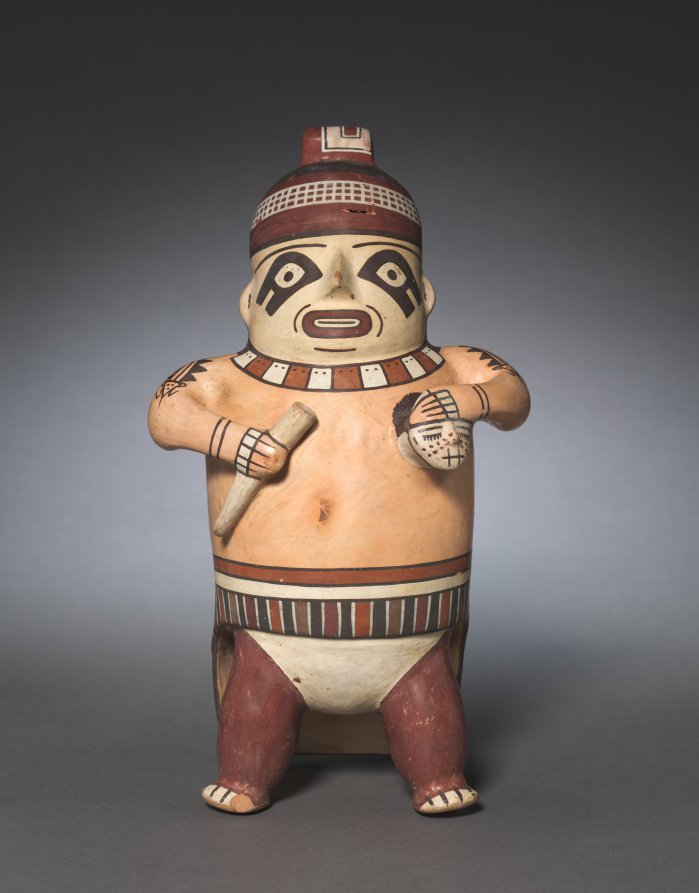
Male Effigy Vessel (100–650 CE (thermoluminescence date, 410–1010 CE)) is in the Cleveland Museum of Art collection.
The work and its context
The museum's open-access catalogue describes the work:
The style is typically Nasca: modeling is minimal and the surface is decorated with the vibrant, earth-colored slips that are a hallmark of Nasca ceramic art. Male figures are a well-known category of Nasca ceramic production, although the shape of this one, which stands upright on two legs and is additionally supported from behind by a long loincloth, is unusual.
Object facts
- Title: Male Effigy Vessel
- Date: 100–650 CE (thermoluminescence date, 410–1010 CE)
- Culture: Peru, South Coast, Nasca, Early Intermediate Period
- Type: Ceramic
- Technique: ceramic and slip
- Dimensions: Overall: 28.8 x 16 x 17 cm (11 5/16 x 6 5/16 x 6 11/16 in.)
- Collection: AA - Andes
- Department: Art of the Americas
- Accession number: 2012.116
A detail from the museum
This figure holds a human head, which the Nasca viewed as a source of great power.
Collection credit
Severance and Greta Millikin Purchase Fund
View the collection record
See the museum's photographs and full catalogue entry. Catalogue text is reproduced from the Cleveland Museum of Art's open-access data, with HTML formatting removed. This object and its supplied image are designated CC0.
Sources
More in Lifestyle
Keep reading