Man on a Horse (c. 1860s): Art, History and Details
Man on a Horse at the Cleveland Museum of Art: c. 1860s, albumen print from wet collodion negative. Explore the work's context, creator attribution and collection history.
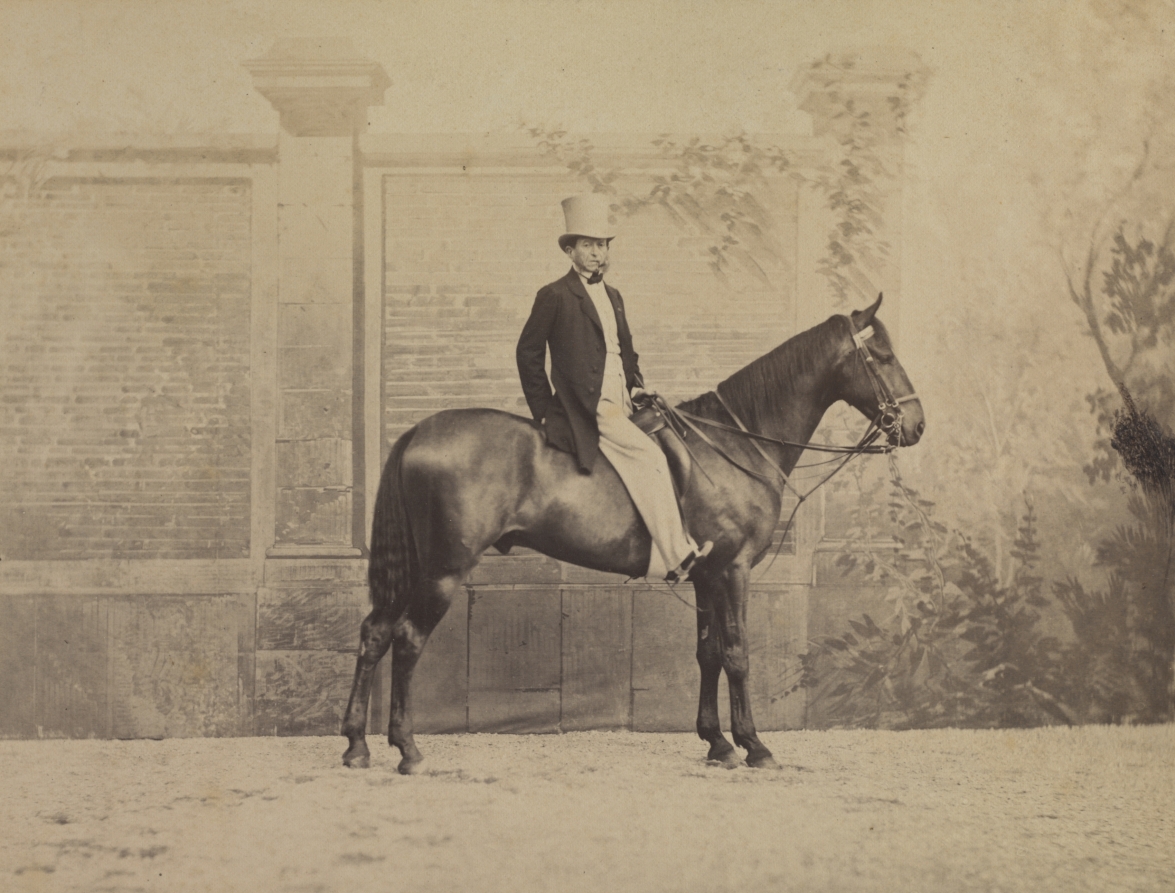
Man on a Horse (c. 1860s) is in the Cleveland Museum of Art collection. The museum's creator attribution is Nadar (French, 1820–1910).
The work and its context
The museum's open-access catalogue describes the work:
The genre of equestrian portraiture dates back to classical Greek and Roman antiquity, when it was used to depict rulers and suggest power and status. In the 19th century, members of the upper classes sometimes had their picture taken astride their horse. The rider here has been identified as Leonardus Antonius Lightenvelt, a Dutch statesman whose final position was as envoy to France, where this photograph was taken.
Object facts
- Title: Man on a Horse
- Date: c. 1860s
- Creator attribution: Nadar (French, 1820–1910)
- Culture: France, 19th century
- Type: Photograph
- Technique: albumen print from wet collodion negative
- Dimensions: Image: 17 x 22.3 cm (6 11/16 x 8 3/4 in.); Matted: 35.6 x 45.7 cm (14 x 18 in.)
- Collection: Photography
- Department: Photography
- Accession number: 1996.336
A detail from the museum
The photographic equipment of the 1860s required a long exposure; it was hard to get a horse to remain perfectly still for a long time.
Collection credit
Gift of Robert Hershkowitz and Charles Isaacs
View the collection record
See the museum's photographs and full catalogue entry. Catalogue text is reproduced from the Cleveland Museum of Art's open-access data, with HTML formatting removed. This object and its supplied image are designated CC0.
Sources
More in Lifestyle
Keep reading