Man with Walking Stick (late 1870s): Art, History and Details
Man with Walking Stick at the Cleveland Museum of Art: late 1870s, albumen print from wet collodion negative. Explore the work's context, creator attribution and collection history.
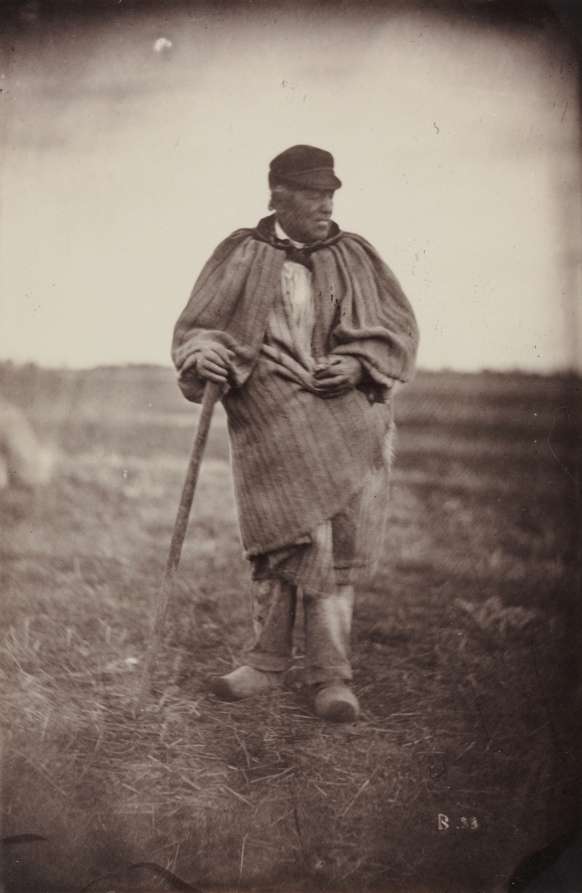
Man with Walking Stick (late 1870s) is in the Cleveland Museum of Art collection. The museum's creator attribution is Auguste Giraudon's Artist (French).
The work and its context
The museum's open-access catalogue describes the work:
Auguste Giraudon was an important Parisian publisher of photographs. During the 1870s, he commissioned one or more artists—probably a French painter who wished to remain anonymous—to create photographs of peasants. Now called Giraudon’s Artist, this photographer was one of the few in the 1800s specializing in rural figure studies created for use by artists. The images were likely taken near Barbizon, a destination popular with artists who wanted to work from nature. The artistry of these images derives from their skillful use of light, ability to render a subject in the landscape, and a perceptive depiction of human dignity.
Object facts
- Title: Man with Walking Stick
- Date: late 1870s
- Creator attribution: Auguste Giraudon's Artist (French)
- Culture: France, 19th century
- Type: Photograph
- Technique: albumen print from wet collodion negative
- Dimensions: Image: 17.1 x 11.2 cm (6 3/4 x 4 7/16 in.); Paper: 17.1 x 11.2 cm (6 3/4 x 4 7/16 in.); Matted: 45.7 x 35.6 cm (18 x 14 in.)
- Collection: Photography
- Department: Photography
- Accession number: 2010.7
A detail from the museum
Auguste Giraudon was not a photographer but an important Parisian publisher of photographs.
Collection credit
Purchase from the J. H. Wade Fund
View the collection record
See the museum's photographs and full catalogue entry. Catalogue text is reproduced from the Cleveland Museum of Art's open-access data, with HTML formatting removed. This object and its supplied image are designated CC0.
Sources
More in Lifestyle
Keep reading