Mantle (c. 300 BCE–200 CE): Art, History and Details
Mantle at the Cleveland Museum of Art: c. 300 BCE–200 CE, camelid fiber: plain weave with embroidery. Explore the work's context, creator attribution and collection history.
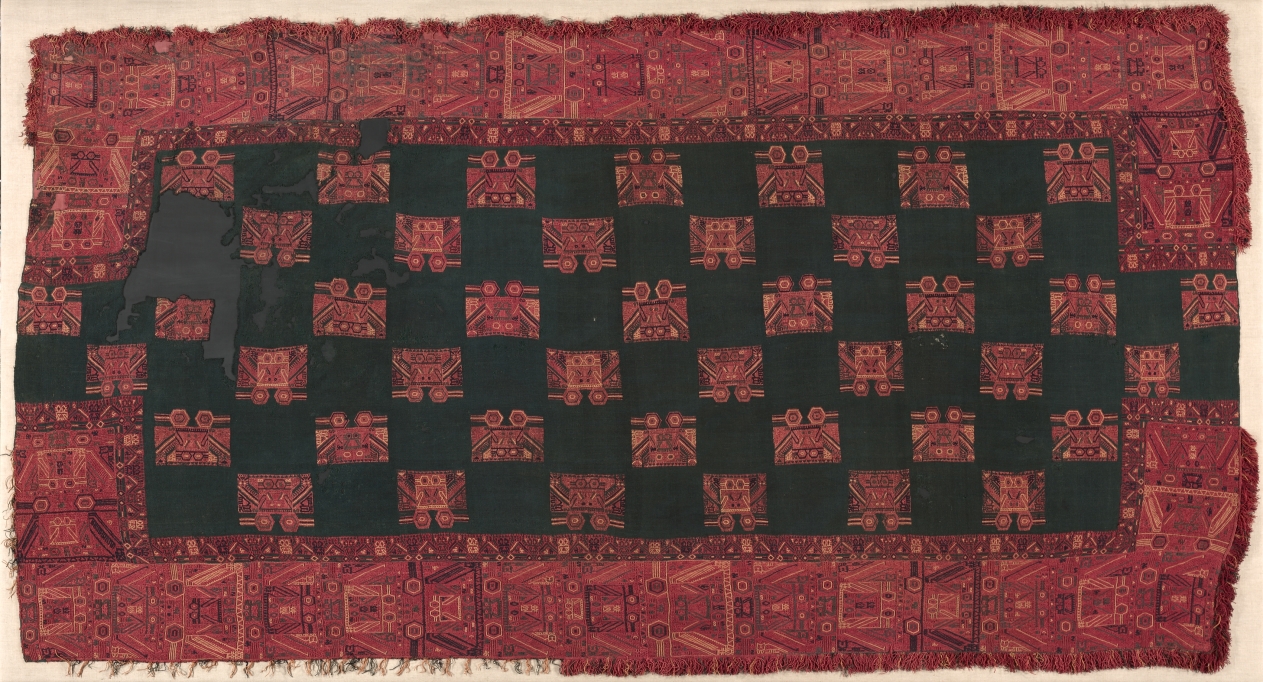
Mantle (c. 300 BCE–200 CE) is in the Cleveland Museum of Art collection.
The work and its context
The museum's open-access catalogue describes the work:
Buried in shaft-tombs, or rectangular sunken chambers, the Paracas dead were wrapped in layers of cloth and accompanied by pottery, food, and other offerings. The dry environment of the Paracas Peninsula helped preserve many of these textiles, including richly ornamented garments buried with important individuals. This mantle, probably worn like a cloak, relates closely to the tunic (CMA 1946.227) and long headband (CMA 1946.228) due to their shared imagery. Its double-headed bird motifs— embroidered in vivid red, blue, yellow, and green yarns—likely had symbolic significance, although the specific meaning remains unknown.
Object facts
- Title: Mantle
- Date: c. 300 BCE–200 CE
- Culture: Peru, South Coast, Paracas (Cavernas) style
- Type: Textile
- Technique: camelid fiber: plain weave with embroidery
- Dimensions: Overall: 154.9 x 292.1 cm (61 x 115 in.); Mounted: 162.6 x 299.7 cm (64 x 118 in.)
- Collection: T - Pre-Columbian
- Department: Textiles
- Accession number: 1946.226
A detail from the museum
The profusion and decoration of textiles in Paracas burials shows the value placed on cloth.
Collection credit
The Norweb Collection
Further reading listed by the museum
- Wise, John, and Wendell Clark Bennett. Ancient Peruvian Art, Lent by John Wise, Esq., New York; an Exhibition of the Wadsworth Atheneum, Opening March 3, 1937, Hartford, Connecticut. 1937.
View the collection record
See the museum's photographs and full catalogue entry. Catalogue text is reproduced from the Cleveland Museum of Art's open-access data, with HTML formatting removed. This object and its supplied image are designated CC0.
Sources
More in Lifestyle
Keep reading