Mask (early 1900s, before 1933–37): Art, History and Details
Mask at the Cleveland Museum of Art: early 1900s, before 1933–37, Wood, copper alloy, plant fiber, cloth, rawhide or leather, teeth, seeds, resin, synthetic material, iron, and glass beads. Explore the work's context, creator attribution an
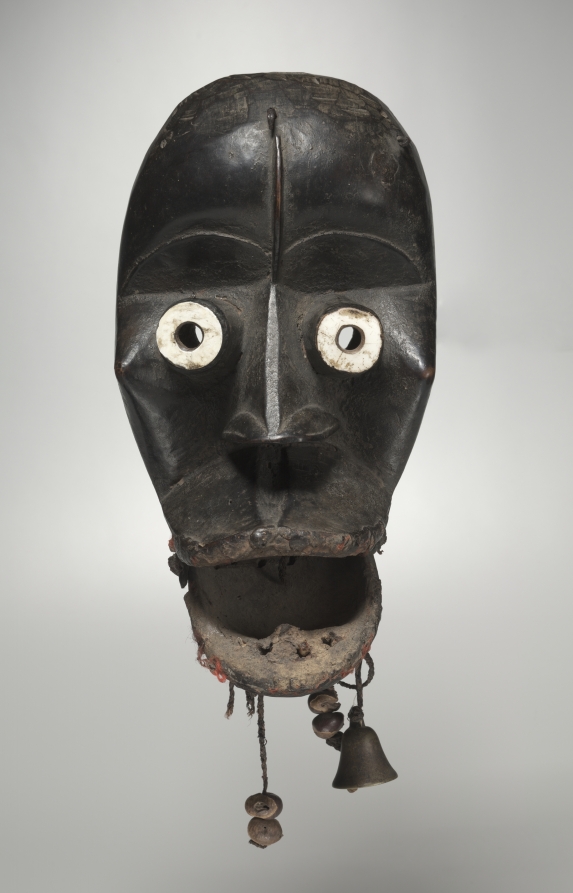
Mask (early 1900s, before 1933–37) is in the Cleveland Museum of Art collection.
The work and its context
The museum's open-access catalogue describes the work:
Generally, Mano masks are considered to be manifestations of forest spirits and can be grouped into 11 major types relating to aspects of social control, political and judicial matters, peacemaking, education, competition, and entertainment. This mask was acquired in Liberia by the medical missionary George Harley between 1933 and 1937.
Object facts
- Title: Mask
- Date: early 1900s, before 1933–37
- Culture: Africa, West Africa, Liberia, Mano-style carver
- Type: Mask
- Technique: Wood, copper alloy, plant fiber, cloth, rawhide or leather, teeth, seeds, resin, synthetic material, iron, and glass beads
- Dimensions: Overall: 28 x 15.2 cm (11 x 6 in.)
- Collection: African Art
- Department: African Art
- Accession number: 1953.457
A detail from the museum
The jaw of this mask is hinged, allowing it to open and close.
Collection credit
The Harold T. Clark Educational Extension Fund
Further reading listed by the museum
- Petridis, Constantijn. South of the Sahara: selected works of African art. Cleveland: Cleveland Museum of Art, 2003.
- Petridis, Constantine. "A "Harley Mask" at the Cleveland Museum of Art: More on Masks among the Mano and Dan Peoples (Liberia/Cote d'Ivoire)." African Arts 45:1 (Spring 2012): p 17, no 1
View the collection record
See the museum's photographs and full catalogue entry. Catalogue text is reproduced from the Cleveland Museum of Art's open-access data, with HTML formatting removed. This object and its supplied image are designated CC0.
Sources
More in Lifestyle
Keep reading