Mask (Omono or Tana Wurum Bogoro) (early 1900s): Art, History and Details
Mask (Omono or Tana Wurum Bogoro) at the Cleveland Museum of Art: early 1900s, Wood and paint. Explore the work's context, creator attribution and collection history.
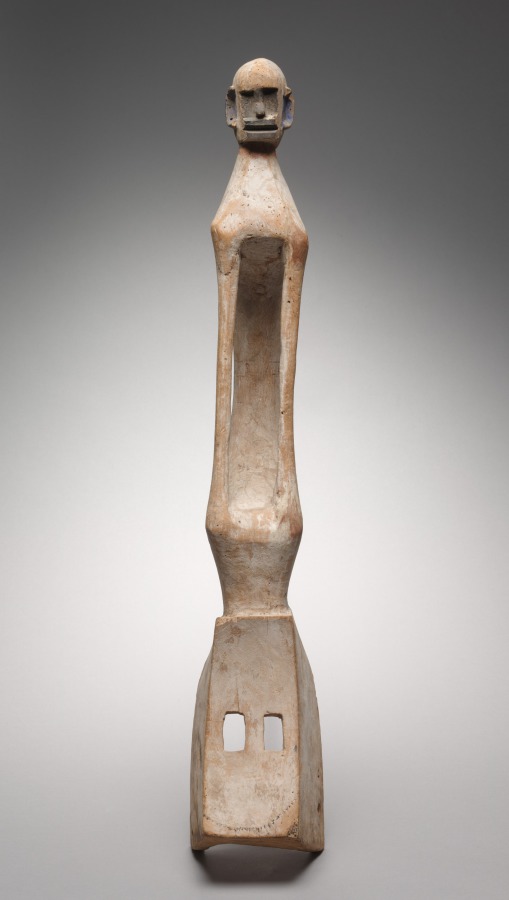
Mask (Omono or Tana Wurum Bogoro) (early 1900s) is in the Cleveland Museum of Art collection.
The work and its context
The museum's open-access catalogue describes the work:
Dogon masks can be interpreted on two fundamentally different levels: “front speech” (giri so) reflects an early stage of knowledge and consists of a tale that is intended to arouse curiosity; and “speech of the world” (aduno so) refers to Dogon cosmogony, reserved for highly instructed men and women. Masked dances have recently been organized in Dogon regions for tourists and dignitaries. The character of omono is a rare one among the 80 or so that appear in Dogon masquerades.
Object facts
- Title: Mask (Omono or Tana Wurum Bogoro)
- Date: early 1900s
- Culture: Africa, West Africa, Mali, Dogon-style blacksmith-carver
- Type: Mask
- Technique: Wood and paint
- Dimensions: Overall: 91.5 cm (36 in.)
- Collection: African Art
- Department: African Art
- Accession number: 1975.151
A detail from the museum
The long-armed figure at the top of this mask is omono, a white-bellied monkey.
Collection credit
Gift of Katherine C. White
Further reading listed by the museum
- Fagg, William, and Cleveland Museum of Art. 1968. African Tribal Images; the Katherine White Reswick Collection, no. 2. Cleveland: Cleveland Museum of Art.
- Lee, Sherman E. “The Year in Review for 1975.” The Bulletin of the Cleveland Museum of Art 63, no. 2 (February 1976): 31–71.
View the collection record
See the museum's photographs and full catalogue entry. Catalogue text is reproduced from the Cleveland Museum of Art's open-access data, with HTML formatting removed. This object and its supplied image are designated CC0.
Sources
More in Lifestyle
Keep reading