Mask (wan-balinga) (early 1900s): Art, History and Details
Mask (wan-balinga) at the Cleveland Museum of Art: early 1900s, Wood and paint. Explore the work's context, creator attribution and collection history.
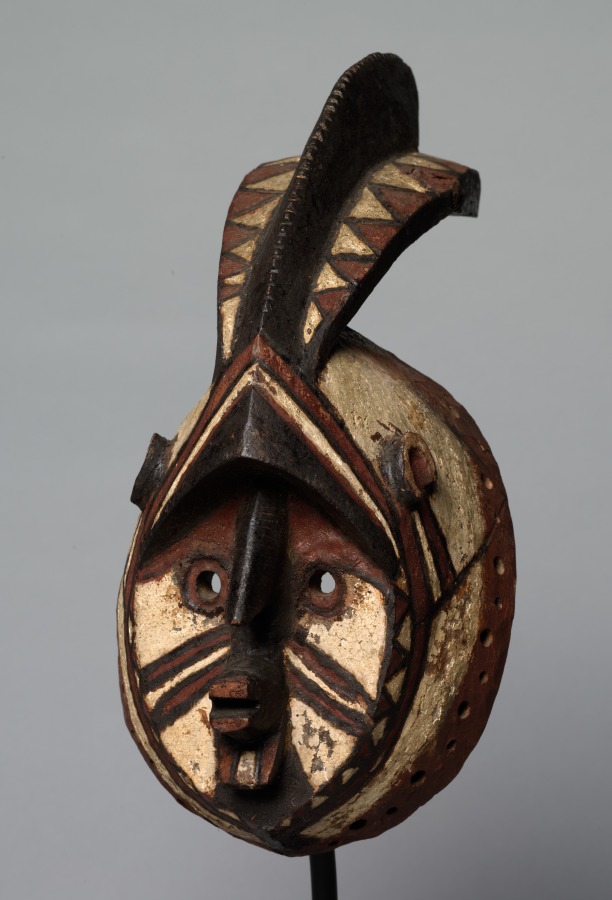
Mask (wan-balinga) (early 1900s) is in the Cleveland Museum of Art collection.
The work and its context
The museum's open-access catalogue describes the work:
Only the farmers among the Mossi people employ masks. This mask’s proper name, wan-balinga, evokes a mythical figure who was the mother of the first Mossi ruler. Such masks are most typically worn and danced with on the occasion of the funeral of a male or female elder as escorts of the corpse to the grave. They also appear during annual memorial services that occur months after the actual burial, when all the deceased clan members are commemorated and honored.
Object facts
- Title: Mask (wan-balinga)
- Date: early 1900s
- Culture: Africa, West Africa, Burkina Faso, Mossi-style blacksmith-carver
- Type: Mask
- Technique: Wood and paint
- Dimensions: Overall: 34 x 14 x 14 cm (13 3/8 x 5 1/2 x 5 1/2 in.)
- Collection: African Art
- Department: African Art
- Accession number: 2014.1
A detail from the museum
This mask was worn and danced upon the death of an elder, escorting the corpse to the grave.
Collection credit
Purchase from the J. H. Wade Fund
Further reading listed by the museum
- Germain, Jacques, Céline Marti, and Hughes Dubois. 2006. Art Ancien De L’afrique Noire. Montréal: Jacques Germain Arts Ethnographiques, p.31.
- Petridis, Constantine. “Acquisition Highlights 2014: African Art.” Cleveland Art: Cleveland Museum of Art Members Magazine 55, no. 2 (March/April 2015): 17.
View the collection record
See the museum's photographs and full catalogue entry. Catalogue text is reproduced from the Cleveland Museum of Art's open-access data, with HTML formatting removed. This object and its supplied image are designated CC0.
Sources
More in Lifestyle
Keep reading