Melon-shaped Wine Ewer (lid) (1100s-1200s): Art, History and Details
Melon-shaped Wine Ewer (lid) at the Cleveland Museum of Art: 1100s-1200s, celadon ware. Explore the work's context, creator attribution and collection history.
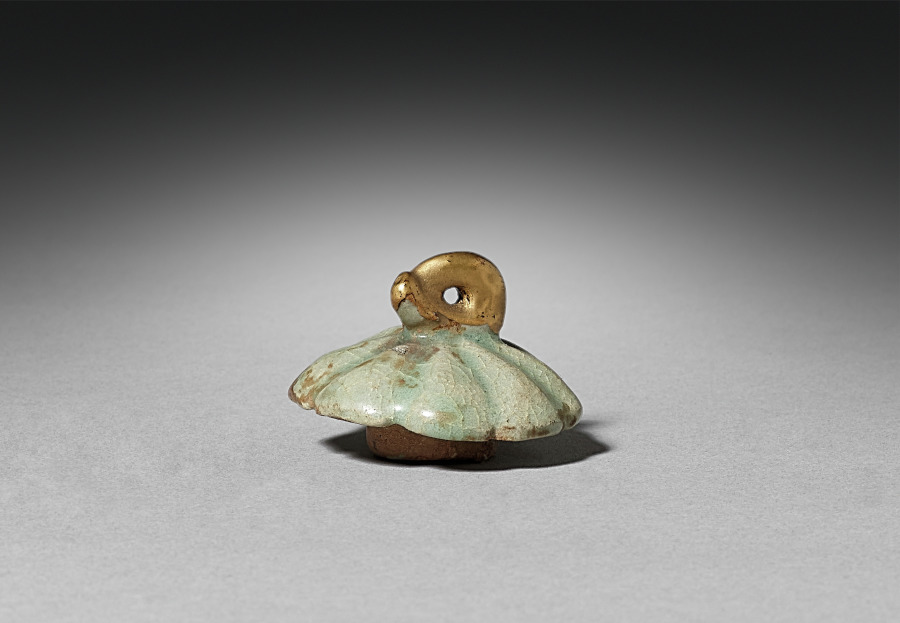
Melon-shaped Wine Ewer (lid) (1100s-1200s) is in the Cleveland Museum of Art collection.
The work and its context
The museum's open-access catalogue describes the work:
Many celadon ceramics, such as these two miniature pots, have been repaired with gold lacquer. Termed kintsugi (literally meaning “gold joinery”) in Japanese, this restoration method highlights broken parts with glittering gold mixed with lacquer. Initiated in 15th-century Japan, the technique follows a popular aesthetic concept called wabi-sabi, which finds beauty in imperfect things. Goryeo celadons were considered rare treasures among early 20th-century Japanese collectors; thus, their broken condition is brilliantly highlighted in gold lacquer, as seen here in the repaired spouts, handle, and lid.
Object facts
- Title: Melon-shaped Wine Ewer (lid)
- Date: 1100s-1200s
- Culture: Korea, Goryeo dynasty (918–1392)
- Type: Ceramic
- Technique: celadon ware
- Dimensions: Diameter: 9 cm (3 9/16 in.); Overall: 9.6 cm (3 3/4 in.)
- Collection: Korean Art
- Department: Korean Art
- Accession number: 1928.173.b
A detail from the museum
This miniature wine pot was buried in a tomb for the soul of the deceased.
Collection credit
Gift of John L. Severance
Further reading listed by the museum
- Goryeo Dynasty: Korea's Age of Enlightenment, 918-1392. San Francisco: Asian Art Museum, 2003.
- Goryeo: The Glory of Korea [대고려, 그 찬란한 도전]. Seoul: National Museum of Korea, 2018.
- Sparkles of Jade: Goryeo Celadon [高麗青磁 : ヒスイのきらめき]. Ōsaka: Ōsaka: Shiritsu Tōyō Tōji Bijutsukan, 2018.
View the collection record
See the museum's photographs and full catalogue entry. Catalogue text is reproduced from the Cleveland Museum of Art's open-access data, with HTML formatting removed. This object and its supplied image are designated CC0.
Sources
More in Lifestyle
Keep reading