Miniature Garden Seat (late 1700s–early 1800s): Art, History and Details
Miniature Garden Seat at the Cleveland Museum of Art: late 1700s–early 1800s, ivory with pigments. Explore the work's context, creator attribution and collection history.
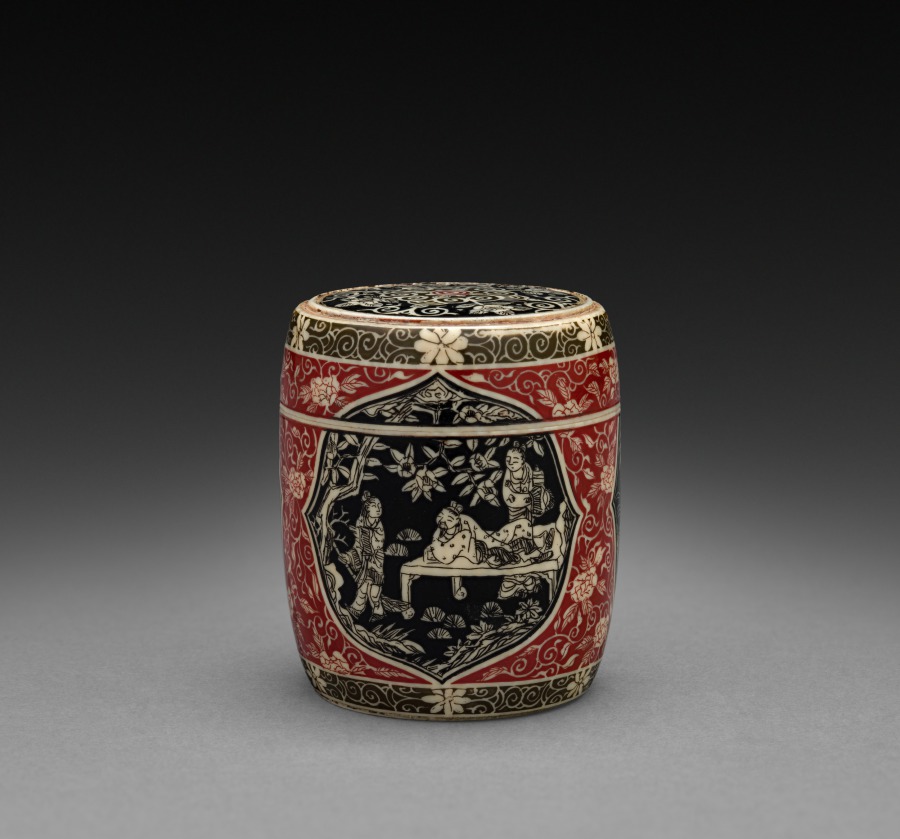
Miniature Garden Seat (late 1700s–early 1800s) is in the Cleveland Museum of Art collection.
The work and its context
The museum's open-access catalogue describes the work:
In the Qing dynasty (1644–1911), luxury items became more affordable to larger parts of the society, including women, merchants, and literati in non-official positions. Imperial patronage and a growing urban population encouraged consumption of luxury goods and local craftmanship. This ivory carved and painted to resemble a miniature garden seat illustrates the superb skills and the creative mind of the talented artisans who sought clients on a competitive market.
Object facts
- Title: Miniature Garden Seat
- Date: late 1700s–early 1800s
- Culture: China, Qing dynasty (1644-1911), Qianlong mark and reign (1736-95)
- Type: Ivory
- Technique: ivory with pigments
- Dimensions: Overall: 4.4 x 3.8 cm (1 3/4 x 1 1/2 in.)
- Collection: China - Qing Dynasty
- Department: Chinese Art
- Accession number: 1989.330
A detail from the museum
A servant carrying a qin, zither, accompanies two gentlemen admiring the trees.
Collection credit
Bequest of Mrs. Severance A. Millikin
Further reading listed by the museum
- Catalogue of the Severance and Greta Millikin Collection. Cleveland, OH: Cleveland Museum of Art, 1990.
View the collection record
See the museum's photographs and full catalogue entry. Catalogue text is reproduced from the Cleveland Museum of Art's open-access data, with HTML formatting removed. This object and its supplied image are designated CC0.
Sources
More in Lifestyle
Keep reading