Mirror (1200s–1300s): Art, History and Details
Mirror at the Cleveland Museum of Art: 1200s–1300s, bronze. Explore the work's context, creator attribution and collection history.
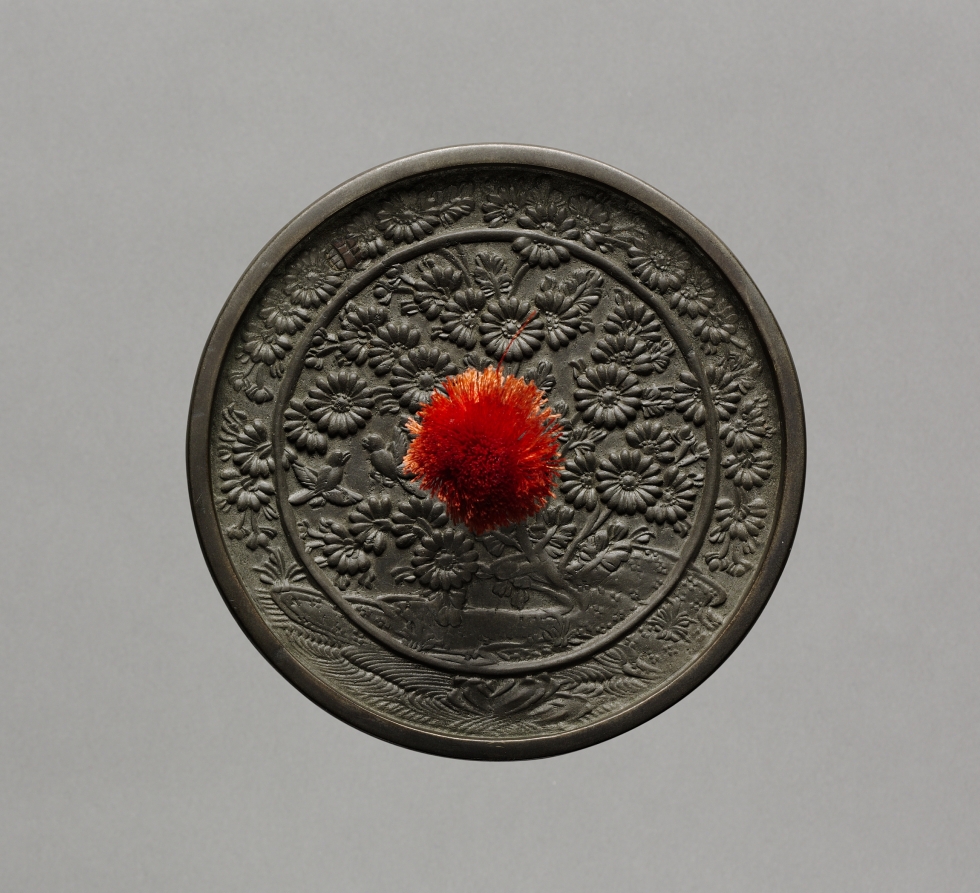
Mirror (1200s–1300s) is in the Cleveland Museum of Art collection.
The work and its context
The museum's open-access catalogue describes the work:
The Japanese used chrysanthemums as decorative elements on mirrors. In the Heian period, a chrysanthemum with cranes or long-tailed birds was a common motif. Later, in the Kamakura and Muromachi periods, chrysanthemum designs were divided into three patterns with different symbolic associations: Chrysanthemum with Cranes represented longevity; Water Flowing suggested longevity as well as the Noh drama Kikujido, or Chrysanthemum Boy; and East Fence alluded to the poem "Drinking Wine" by Tao Yuanming (365–427 CE). Here, the mirror featuring Buddhist iconography (kyojo) and a chrysanthemum design on the back shows that the flower was also appreciated in the context of Buddhism in the Kamakura period.
Object facts
- Title: Mirror
- Date: 1200s–1300s
- Culture: Japan, Kamakura period (1185–1333)
- Type: Metalwork
- Technique: bronze
- Dimensions: Diameter: 10.7 cm (4 3/16 in.)
- Collection: Japanese Art
- Department: Japanese Art
- Accession number: 1917.640
Collection credit
Gift of D. Z. Norton
Further reading listed by the museum
- "Accessions." The Bulletin of the Cleveland Museum of Art 4, no. 4 (1917): 64-67.
- Sŏn, Sŭng-hye. The Lure of Painted Poetry: Japanese and Korean Art. Cleveland, OH: The Cleveland Museum of Art, 2011.
View the collection record
See the museum's photographs and full catalogue entry. Catalogue text is reproduced from the Cleveland Museum of Art's open-access data, with HTML formatting removed. This object and its supplied image are designated CC0.
Sources
More in Lifestyle
Keep reading