Mirror with the Image of Avalokitesvara (early 1900s): Art, History and Details
Mirror with the Image of Avalokitesvara at the Cleveland Museum of Art: early 1900s, bronze with incised Buddhist designs. Explore the work's context, creator attribution and collection history.
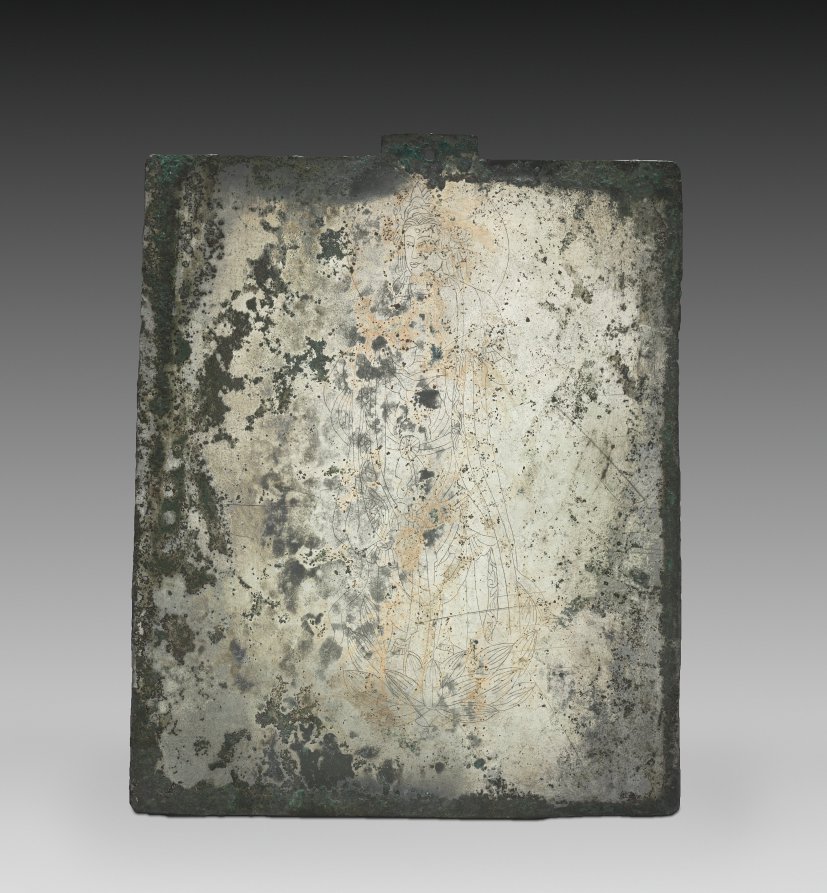
Mirror with the Image of Avalokitesvara (early 1900s) is in the Cleveland Museum of Art collection.
The work and its context
The museum's open-access catalogue describes the work:
Mirrors, along with swords and jade, were among the most important symbols of power. It is thought that mirrors held power through their ability to catch and reflect light. This rare trapezoid-shaped example is engraved with an image of the Avalokitesvara, Bodhisattva of Compassion and was used as a part of Buddhist rituals.
Object facts
- Title: Mirror with the Image of Avalokitesvara
- Date: early 1900s
- Culture: Korea, Joseon dynasty (1392–1910)
- Type: Metalwork
- Technique: bronze with incised Buddhist designs
- Dimensions: Overall: 15.7 x 13 cm (6 3/16 x 5 1/8 in.)
- Collection: Korean Art
- Department: Korean Art
- Accession number: 1918.531
A detail from the museum
Due to its origin as an important tool in religion and politics, mirrors are often mentioned in many Korean proverbs that warn certain behaviors.
Collection credit
Director's Contingent Fund
Further reading listed by the museum
- An, Gui-sook, Korean Bronze Artisans [유기장]. Seoul: Hwasan munhwa, 2002.
View the collection record
See the museum's photographs and full catalogue entry. Catalogue text is reproduced from the Cleveland Museum of Art's open-access data, with HTML formatting removed. This object and its supplied image are designated CC0.
Sources
More in Lifestyle
Keep reading