Monkey Figure (c. 1850–1900): Art, History and Details
Monkey Figure at the Cleveland Museum of Art: c. 1850–1900, porcelain, silver-gilt. Explore the work's context, creator attribution and collection history.
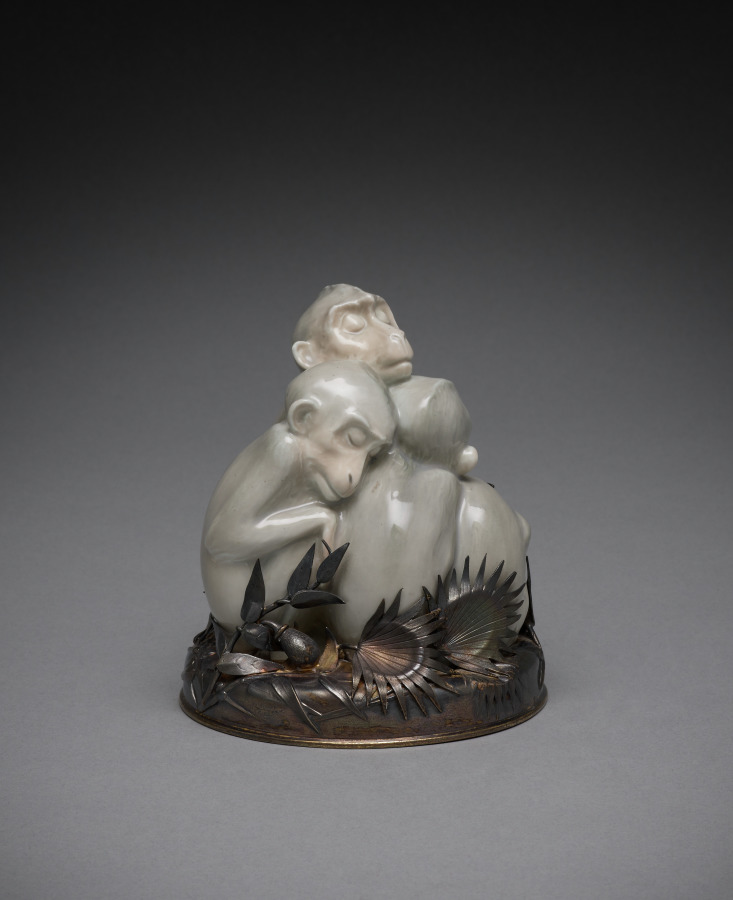
Monkey Figure (c. 1850–1900) is in the Cleveland Museum of Art collection. The museum's creator attribution is Ingeborg Plockross-Iminger (Danish, 1872–1962); Bing & Grøndahl (Danish, est. 1853).
The work and its context
The museum's open-access catalogue describes the work:
This figure featuring three monkeys was designed by the Danish ceramicist Ingeborg Plockross-Iminger. The figure is displayed with a French silver mount that references Japonisme and Art Nouveau styles that were popular at the end of the 1800s and experienced a resurgence in the 1920s because of increased importation of Japanese goods to the West.
Object facts
- Title: Monkey Figure
- Date: c. 1850–1900
- Creator attribution: Ingeborg Plockross-Iminger (Danish, 1872–1962); Bing & Grøndahl (Danish, est. 1853)
- Culture: Sweden, 19th century
- Type: Sculpture
- Technique: porcelain, silver-gilt
- Dimensions: Overall: 20 x 46.6 x 21 cm (7 7/8 x 18 3/8 x 8 1/4 in.)
- Collection: Decorative Arts
- Department: Decorative Art and Design
- Accession number: 2009.109.a
A detail from the museum
This ceramic figure usually stands alone, without a silver mounting.
Collection credit
Bequest of Muriel Butkin
View the collection record
See the museum's photographs and full catalogue entry. Catalogue text is reproduced from the Cleveland Museum of Art's open-access data, with HTML formatting removed. This object and its supplied image are designated CC0.
Sources
More in Lifestyle
Keep reading
Related stories