Moon Lute (Yueqin) (1800s): Art, History and Details
Moon Lute (Yueqin) at the Cleveland Museum of Art: 1800s, Rosewood, wutong (paulownia) wood, and gut. Explore the work's context, creator attribution and collection history.
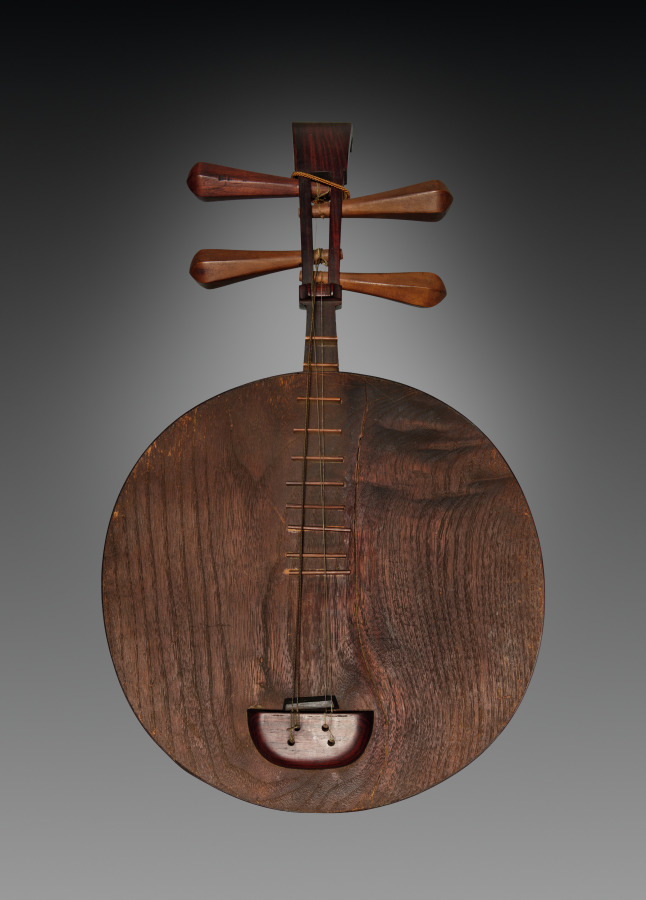
Moon Lute (Yueqin) (1800s) is in the Cleveland Museum of Art collection.
The work and its context
The museum's open-access catalogue describes the work:
Its resemblance to the full moon (yue 月) gives the yueqin its name. Found in popular ensembles, the Beijing and folk (jingxi) operas and used to accompany song, the yueqin has only recently been embraced by the modern Chinese orchestra. The player presses the strings between the frets making chord playing difficult but giving increased control over the timbre and intonation. Strings are plucked with fingernails or a pick using up-and-down strokes and tremolo techniques that sustain and provide color to a tone. It is known as gekkin in Japan.
Object facts
- Title: Moon Lute (Yueqin)
- Date: 1800s
- Culture: China, Qing dynasty (1644-1911)
- Type: Musical Instrument
- Technique: Rosewood, wutong (paulownia) wood, and gut
- Dimensions: 58.4 x 35.6 cm (23 x 14 in.)
- Collection: Chinese Art
- Department: Chinese Art
- Accession number: 1918.382
Collection credit
The Charles G. King Jr. collection; Gift of Ralph King in memory of Charles G. King Jr.
Further reading listed by the museum
- "Accessions." The Bulletin of the Cleveland Museum of Art 5, no. 8/9 (1918): 82-85.
- D. S. M. "Exhibition of Musical Instruments." The Bulletin of the Cleveland Museum of Art 8, no. 9 (1921): 134-43.
View the collection record
See the museum's photographs and full catalogue entry. Catalogue text is reproduced from the Cleveland Museum of Art's open-access data, with HTML formatting removed. This object and its supplied image are designated CC0.
Sources
More in Lifestyle
Keep reading