Mosaic Glass Inlay with Theatre Mask (c. 50 BCE–100 CE): Art, History and Details
Mosaic Glass Inlay with Theatre Mask at the Cleveland Museum of Art: c. 50 BCE–100 CE, white, green, yellow and red glass. Explore the work's context, creator attribution and collection history.
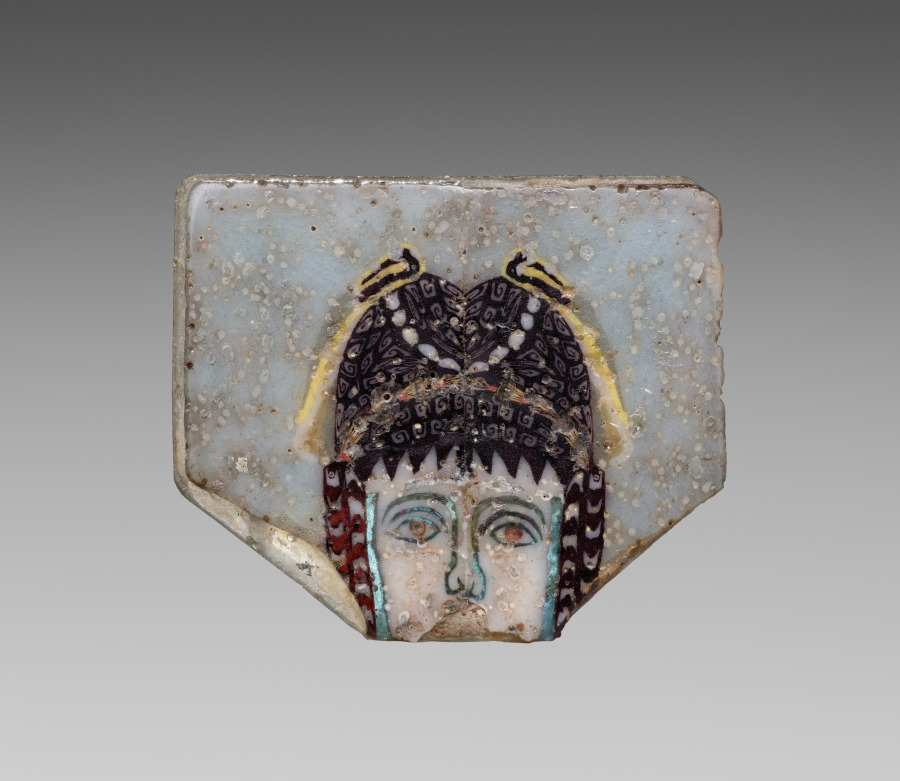
Mosaic Glass Inlay with Theatre Mask (c. 50 BCE–100 CE) is in the Cleveland Museum of Art collection.
The work and its context
The museum's open-access catalogue describes the work:
Probably made to adorn a vessel or another object, this small inlay is comprised of two rectangular glass plaques sliced from a longer multicolored cane or rod and joined at the center to form a representation of a frontal comic theater mask. The white face and complex upswept hairdo indicate a female figure, probably a maenad or hetaira/courtesan.
Object facts
- Title: Mosaic Glass Inlay with Theatre Mask
- Date: c. 50 BCE–100 CE
- Culture: Egypt, Roman Period
- Type: Glass
- Technique: white, green, yellow and red glass
- Dimensions: Overall: 2.9 x 3.4 cm (1 1/8 x 1 5/16 in.)
- Collection: GR - Roman
- Department: Greek and Roman Art
- Accession number: 2026.16
A detail from the museum
This nearly symmetrical face, made from two identical mosaic glass slices, represents a theatrical mask.
Collection credit
The Jane B. Tripp Charitable Lead Annuity Trust
View the collection record
See the museum's photographs and full catalogue entry. Catalogue text is reproduced from the Cleveland Museum of Art's open-access data, with HTML formatting removed. This object and its supplied image are designated CC0.
Sources
More in Lifestyle
Keep reading