Mourner from the Tomb of Philip the Bold, Duke of Burgundy (1364–1404) (1404–10): Art, History and Details
Mourner from the Tomb of Philip the Bold, Duke of Burgundy (1364–1404) at the Cleveland Museum of Art: 1404–10, vizille alabaster. Explore the work's context, creator attribution and collection history.
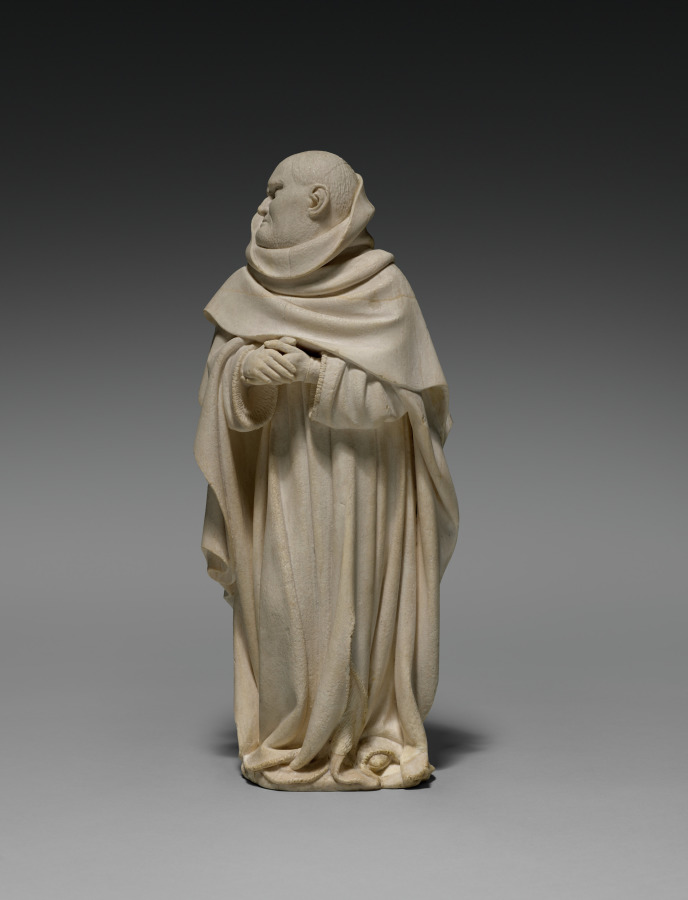
Mourner from the Tomb of Philip the Bold, Duke of Burgundy (1364–1404) (1404–10) is in the Cleveland Museum of Art collection. The museum's creator attribution is Claus de Werve (Netherlandish, 1380–1439).
The work and its context
The museum's open-access catalogue describes the work:
This figure comes from the tomb of Duke Philip the Bold from the church of Champmol near Dijon (Burgundy, France). Philip, who founded the monastery and designated it as his burial place, hired the best artists, many of whom came from the Netherlands. While the commission was given in 1381, the work was not completed until 1410, six years after the duke’s death. This mourner is unusual for the time because it is not carved as a static low relief on the pedestal of the tomb but interact with the viewers and their fellow procession members. The lifelike quality of the figure is due in large part to the alabaster. Its softness allowed artists to carve details into the material, and the transparent, milky white stone could also be polished to a high gloss.
Object facts
- Title: Mourner from the Tomb of Philip the Bold, Duke of Burgundy (1364–1404)
- Date: 1404–10
- Creator attribution: Claus de Werve (Netherlandish, 1380–1439)
- Culture: Netherlands, active Dijon, 15th century
- Type: Sculpture
- Technique: vizille alabaster
- Dimensions: Overall: 41.1 x 17.6 x 11 cm (16 3/16 x 6 15/16 x 4 5/16 in.)
- Collection: MED - Gothic
- Department: Medieval Art
- Accession number: 1958.67
A detail from the museum
The use of alabaster in the late Middle Ages began in the 1300s with court art in the circles of French kings, especially in the field of funerary sculpture.
Collection credit
Bequest of Leonard C. Hanna Jr.
Further reading listed by the museum
- Musée Des Beaux-Arts, Dijon France
- Beaulieu, Michèle. 1949. "Deux pleurants de Jaume Cascalls provenant des sépultures royales de Poblet: Musée du Louvre". Musées De France. 96-98.
- Cleveland Museum of Art, and William Mathewson Milliken. In Memoriam: Leonard C. Hanna, Jr. [Catalogue]. 1958.
View the collection record
See the museum's photographs and full catalogue entry. Catalogue text is reproduced from the Cleveland Museum of Art's open-access data, with HTML formatting removed. This object and its supplied image are designated CC0.
Sources
More in Lifestyle
Keep reading