Mucius Scaevola (1608): Art, History and Details
Mucius Scaevola at the Cleveland Museum of Art: 1608, chiaroscuro woodcut. Explore the work's context, creator attribution and collection history.
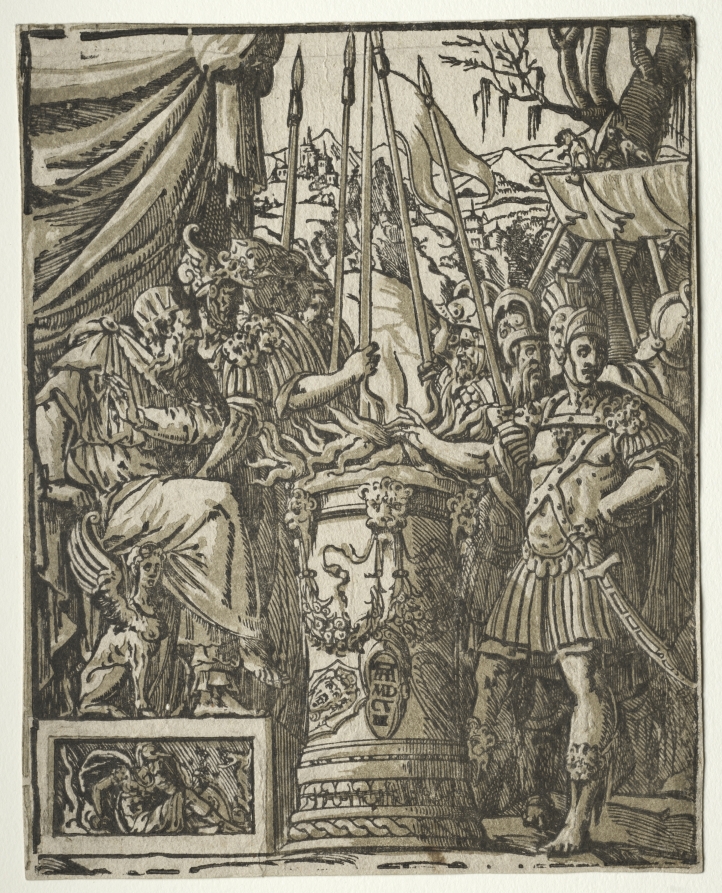
Mucius Scaevola (1608) is in the Cleveland Museum of Art collection. The museum's creator attribution is Andrea Andreani (Italian, about 1558–1610); Balthasar Peruzzi (Italian, 1481–1536).
The work and its context
The museum's open-access catalogue describes the work:
This chiaroscuro woodcut in two blocks of greenish gray and black was printed after a drawing by Baldassarre Peruzzi. It displays Gaius Mucius Cordus, a youth who saved Rome from the siege ordered by the Etruscan king Lars Porsena in c. 509 BC. The legendary hero was caught while sneaking into the Etruscan camp in an attempt to assassinate Porsena. In this print, Mucius is thrusting his hand into a fire lit for sacrifice to demonstrate his bravery and endurance to torture. Without giving any sign of pain, Mucius earned for himself the nickname "Scaevola" (left-handed), and was freed by his enemy.
Object facts
- Title: Mucius Scaevola
- Date: 1608
- Creator attribution: Andrea Andreani (Italian, about 1558–1610); Balthasar Peruzzi (Italian, 1481–1536)
- Culture: Italy
- Type: Print
- Technique: chiaroscuro woodcut
- Collection: PR - Chiaroscuro
- Department: Prints
- Accession number: 1925.47
Collection credit
Gift of Ralph King
View the collection record
See the museum's photographs and full catalogue entry. Catalogue text is reproduced from the Cleveland Museum of Art's open-access data, with HTML formatting removed. This object and its supplied image are designated CC0.
Sources
More in Lifestyle
Keep reading