Mummy Linen (1540–1296 BCE): Art, History and Details
Mummy Linen at the Cleveland Museum of Art: 1540–1296 BCE, linen: plain weave. Explore the work's context, creator attribution and collection history.
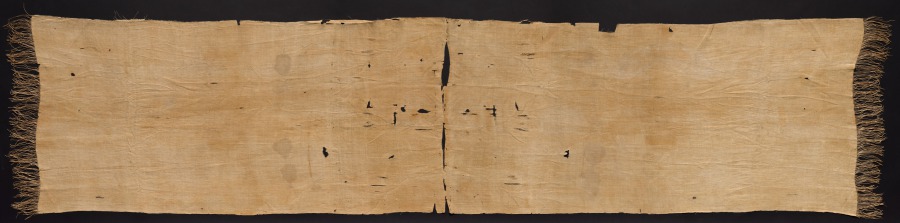
Mummy Linen (1540–1296 BCE) is in the Cleveland Museum of Art collection.
The work and its context
The museum's open-access catalogue describes the work:
The distressed nature of this ensemble, top and skirt, is inspired by the deterioration of linen wrapped around a mummified body. Olivier Rousteing produced the Egyptian-influenced collection immediately after costuming musical artist Beyoncé’s 2018 Coachella performance, which included two ensembles inspired by Queen Nefertiti. Rousteing had resources like the Louvre Museum’s Egyptian art holdings at his disposal for research. The collection, including this ensemble, is experimental, exaggerating ancient Egyptian silhouettes and motifs to develop a fresh, youthful take on Egyptomania fashion.
Object facts
- Title: Mummy Linen
- Date: 1540–1296 BCE
- Culture: Egypt, New Kingdom (1540–1069 BCE), Dynasty 18
- Type: Textile
- Technique: linen: plain weave
- Dimensions: Overall: 289.6 x 65.4 cm (114 x 25 3/4 in.)
- Collection: Textiles
- Department: Textiles
- Accession number: 1921.1026
Collection credit
Charles W. Harkness Endowment Fund
Further reading listed by the museum
- "Accessions." The Bulletin of the Cleveland Museum of Art 8, no. 9 (1921): 138-41.
- Lisby, Darnell-Jamal. “Egyptomania: Fashion and the funeral.” Cleveland Art: Cleveland Museum of Art Members Magazine 63, no. 2 (2023): 4-7.
View the collection record
See the museum's photographs and full catalogue entry. Catalogue text is reproduced from the Cleveland Museum of Art's open-access data, with HTML formatting removed. This object and its supplied image are designated CC0.
Sources
More in Lifestyle
Keep reading