Necklace (amazipho) (1800s): Art, History and Details
Necklace (amazipho) at the Cleveland Museum of Art: 1800s, Glass beads, bone, and sinew. Explore the work's context, creator attribution and collection history.
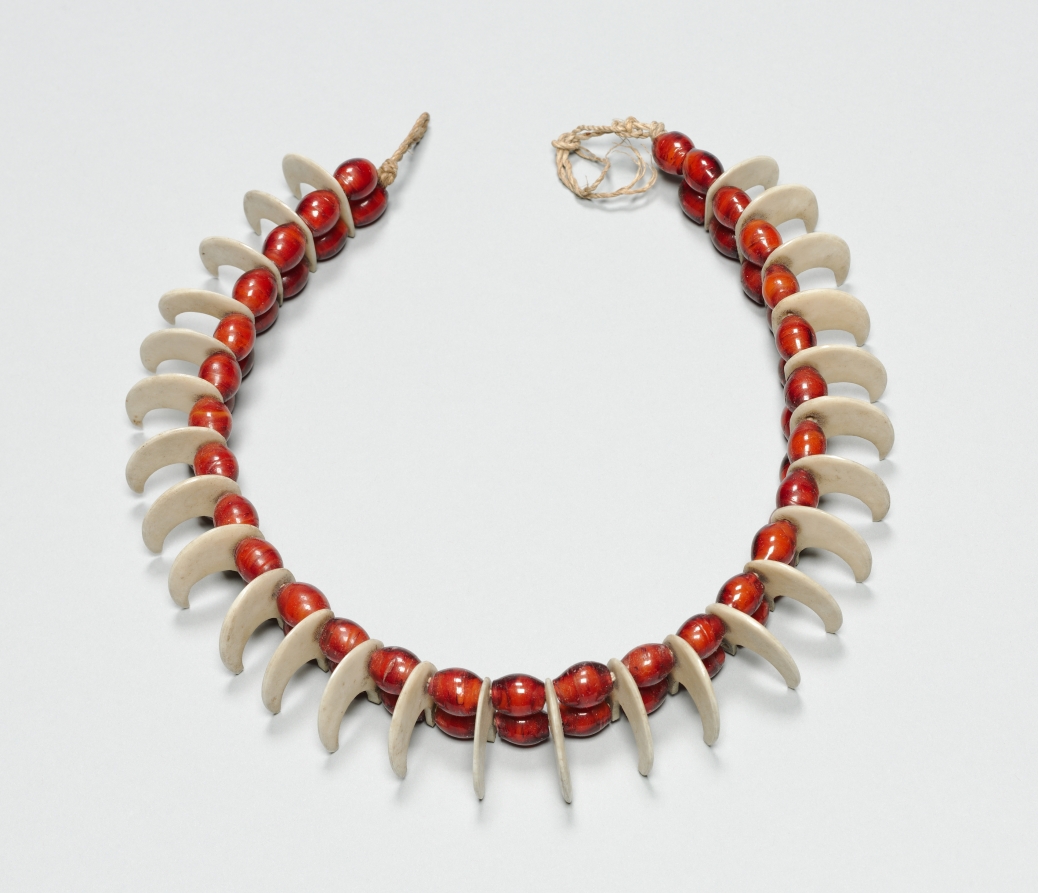
Necklace (amazipho) (1800s) is in the Cleveland Museum of Art collection.
The work and its context
The museum's open-access catalogue describes the work:
When wild game was still plentiful in the region, real animal claws would have been used to punctuate beaded prestige necklaces. Lion-claw necklaces were the exclusive property of royalty while the bone imitations were owned and worn by high-ranking individuals of lesser status. Large red glass beads were also reserved for the Nguni elite in the period before the destruction of the Zulu kingdom in 1879.
Object facts
- Title: Necklace (amazipho)
- Date: 1800s
- Culture: Africa, Southern Africa, South Africa, Southeast Cape Region, Northern Nguni (Zulu)-style maker
- Type: Jewelry
- Technique: Glass beads, bone, and sinew
- Dimensions: Overall: 38.1 cm (15 in.)
- Collection: African Art
- Department: African Art
- Accession number: 2010.231
A detail from the museum
Large red glass beads like the ones in this necklace were reserved for the Nguni elite.
Collection credit
Gift of Dori and Daniel Rootenberg in memory of Estelle Rosenberg
Further reading listed by the museum
- Christie's. "Arts d'Afrique. Collection de Madame Van den Abbeele," Paris, June 12, 2003, lot 121; Pemberton, John, III. African Beaded Art: Power and Adornment, exh. cat. Northampton, Massachusetts: Smith College Museum of Art, 2008, vii (detail) and cat. 127.
View the collection record
See the museum's photographs and full catalogue entry. Catalogue text is reproduced from the Cleveland Museum of Art's open-access data, with HTML formatting removed. This object and its supplied image are designated CC0.
Sources
More in Lifestyle
Keep reading