Necklace Beads in the Form of Fish (185–72 BCE): Art, History and Details
Necklace Beads in the Form of Fish at the Cleveland Museum of Art: 185–72 BCE, gold repoussé with granulation. Explore the work's context, creator attribution and collection history.
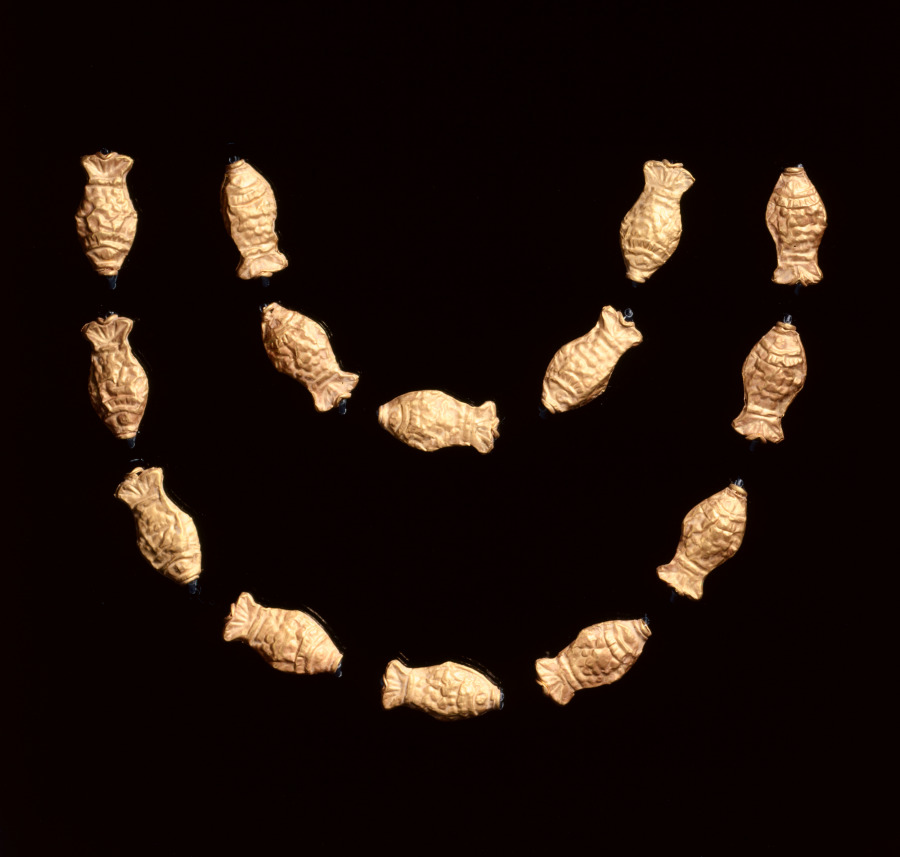
Necklace Beads in the Form of Fish (185–72 BCE) is in the Cleveland Museum of Art collection.
The work and its context
The museum's open-access catalogue describes the work:
Jewelry in ancient India often consisted of elements associated with water, such as fish and other aquatic plants and animals. Since water is essential for life, imagery that connotes water is life-affirming, or auspicious, and therefore appropriate adornment.
Object facts
- Title: Necklace Beads in the Form of Fish
- Date: 185–72 BCE
- Culture: India, Shunga period (185–78 BCE)
- Type: Jewelry
- Technique: gold repoussé with granulation
- Collection: Indian Art - Sunga
- Department: Indian and Southeast Asian Art
- Accession number: 1973.39
Collection credit
John L. Severance Fund
Further reading listed by the museum
- "The Year in Review for 1973." The Bulletin of the Cleveland Museum of Art 61, no. 2 (1974): 31-78.
- Sengupta, Arputha Rani. Buddhist Jewels in Mortuary Cult: Magic Symbols. Delhi: Agam Kala Prakashan, 2019.
- Guy, John. Tree & Serpent: Early Buddhist Art in India. Exh. cat. New York: The Metropolitan Museum of Art, 2023.
View the collection record
See the museum's photographs and full catalogue entry. Catalogue text is reproduced from the Cleveland Museum of Art's open-access data, with HTML formatting removed. This object and its supplied image are designated CC0.
Sources
More in Lifestyle
Keep reading