Necklace (c. 1775–95): Art, History and Details
Necklace at the Cleveland Museum of Art: c. 1775–95, gold, silver, and brilliants. Explore the work's context, creator attribution and collection history.
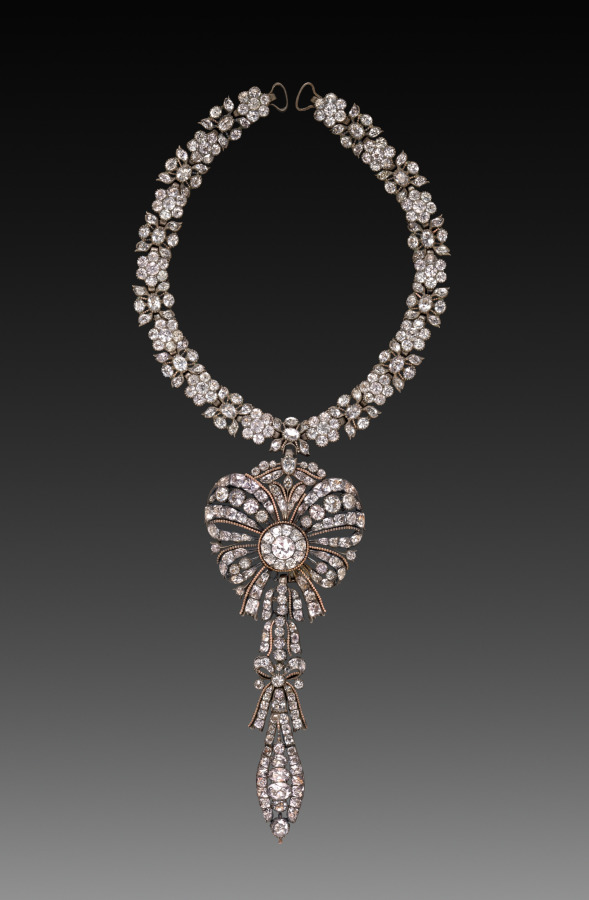
Necklace (c. 1775–95) is in the Cleveland Museum of Art collection.
The work and its context
The museum's open-access catalogue describes the work:
Throughout the 1700s, the growing trade for personal luxury objects transformed the material culture surrounding marriage and courtship. Gifts such as perfume, sheet music, books, textiles, portrait miniatures, and jewelry often demonstrated the status of the gift giver and their investment in the relationship. While intended to be seen and admired, this glittering and ostentatious necklace disguised a system based on the labor and suffering of enslaved or indentured people, whether in gold and stone mines or the shop where it was made.
Object facts
- Title: Necklace
- Date: c. 1775–95
- Culture: England or France
- Type: Jewelry
- Technique: gold, silver, and brilliants
- Dimensions: Part 1: 29.6 cm (11 5/8 in.); Part 2: 12.1 cm (4 3/4 in.)
- Collection: Decorative Arts
- Department: Decorative Art and Design
- Accession number: 1964.35
A detail from the museum
This type of necklace, with its single large pendant, is known as a lavalier and was popular among aristocratic women during the 1700s. Queen Charlotte, wife of George III, was known to have several necklaces of this type.
Collection credit
Gift of Mrs. Severance A. Millikin
View the collection record
See the museum's photographs and full catalogue entry. Catalogue text is reproduced from the Cleveland Museum of Art's open-access data, with HTML formatting removed. This object and its supplied image are designated CC0.
Sources
More in Lifestyle
Keep reading
Related stories