Nowshera, Kashmir (number 1000) (1864): Art, History and Details
Nowshera, Kashmir (number 1000) at the Cleveland Museum of Art: 1864, albumen print from wet collodion negative. Explore the work's context, creator attribution and collection history.
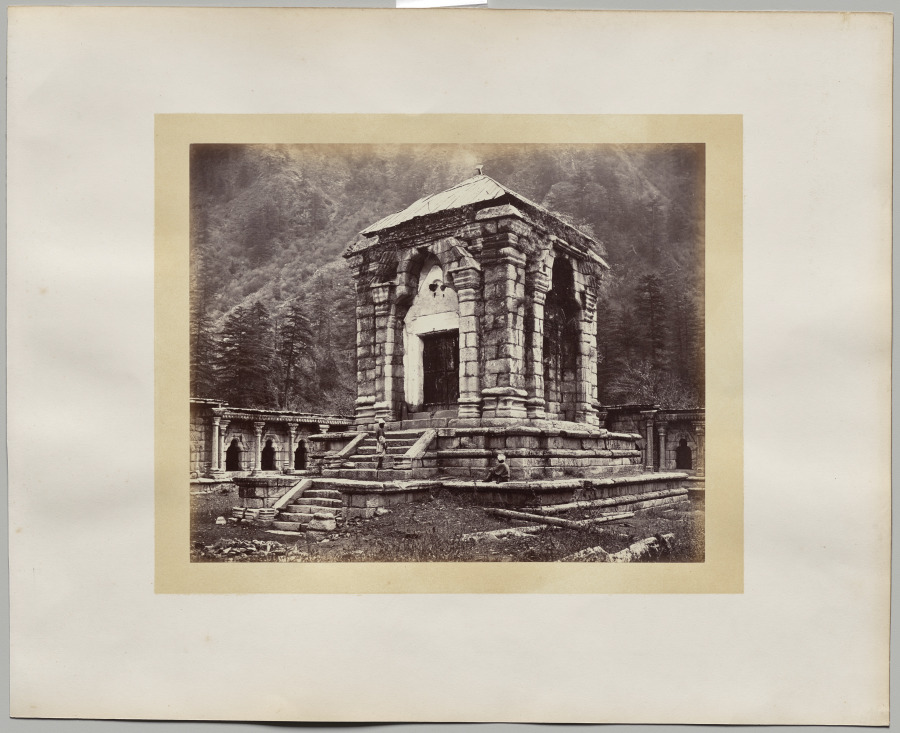
Nowshera, Kashmir (number 1000) (1864) is in the Cleveland Museum of Art collection. The museum's creator attribution is Samuel Bourne (British, 1834–1912).
The work and its context
The museum's open-access catalogue describes the work:
The Buniyar Temple in Navashera is an exceptionally well-preserved example of Kashmiri architecture, durable because it is made of granite rather than the more common limestone. It is believed to date back to the 8th century. For another view taken on the same day by the same artist, search for 1994.186 and glimpse the temple’s roof over the wall surrounding the area.
Object facts
- Title: Nowshera, Kashmir (number 1000)
- Date: 1864
- Creator attribution: Samuel Bourne (British, 1834–1912)
- Culture: England, 19th century
- Type: Photograph
- Technique: albumen print from wet collodion negative
- Dimensions: Image: 24 x 29.5 cm (9 7/16 x 11 5/8 in.); Paper: 24 x 29.5 cm (9 7/16 x 11 5/8 in.); Primary mount: 27.5 x 33.8 cm (10 13/16 x 13 5/16 in.); Secondary mount: 40.9 x 50.5 cm (16 1/8 x 19 7/8 in.)
- Collection: PH - British 19th Century
- Department: Photography
- Accession number: 2019.56
A detail from the museum
Bourne, a banker who was also a passionate amateur photographer in England, became a professional photographer when he arrived in India in 1863.
Collection credit
Photography Discretionary Fund
View the collection record
See the museum's photographs and full catalogue entry. Catalogue text is reproduced from the Cleveland Museum of Art's open-access data, with HTML formatting removed. This object and its supplied image are designated CC0.
Sources
More in Lifestyle
Keep reading