Nymphéa (1922–23): Art, History and Details
Nymphéa at the Cleveland Museum of Art: 1922–23, albumen print, gold-toned. Explore the work's context, creator attribution and collection history.
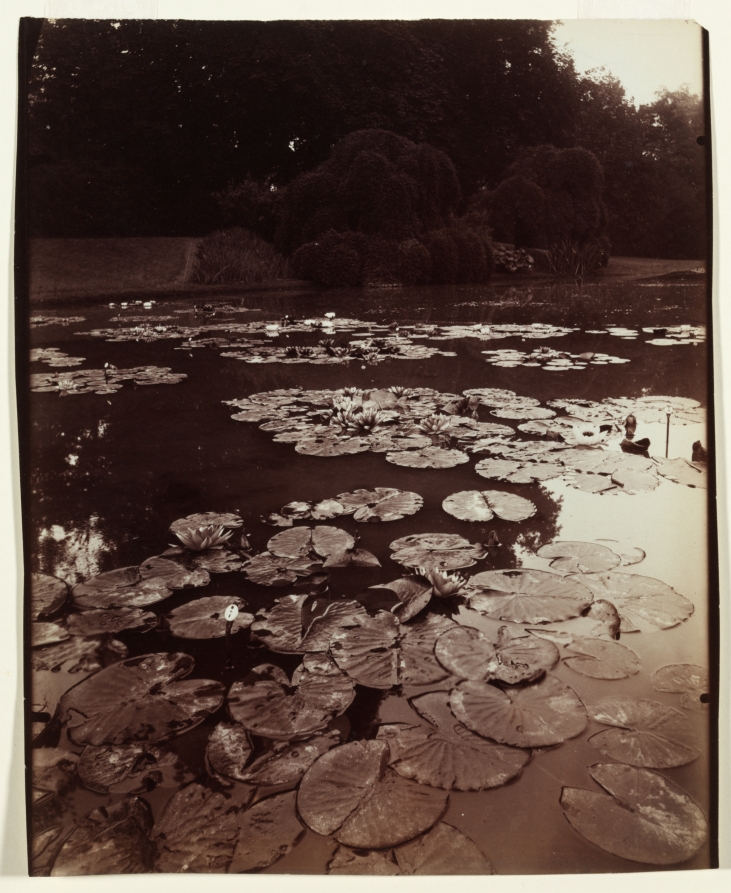
Nymphéa (1922–23) is in the Cleveland Museum of Art collection. The museum's creator attribution is Eugène Atget (French, 1857–1927).
The work and its context
The museum's open-access catalogue describes the work:
A prolific Parisian artist who enjoyed a three-decade career, Atget was one of the most important and original photographers active at the beginning of the 20th century. This sparkling landscape of a mass of white water lily blossoms (Nymphéa) is among Atget's best compositions, created in the 1920s, when he was at the height of his artistic prowess. This scene, full of luxurious botany, was probably taken in Bagatelle Park at the edge of Paris's Bois de Boulogne. He carefully focused on the floating plants and their sculptured flowers, detailing texture and shape. The early morning illumination created light and shadow patterns that enabled Atget to isolate flat, abstracted forms while simultaneously depicting a deep pictorial space. In this lush, purplish print, the lily pond shimmers with reflected shadows and brilliant highlights.
Object facts
- Title: Nymphéa
- Date: 1922–23
- Creator attribution: Eugène Atget (French, 1857–1927)
- Culture: France, 20th century
- Type: Photograph
- Technique: albumen print, gold-toned
- Dimensions: Image: 22.2 x 17.6 cm (8 3/4 x 6 15/16 in.); Matted: 50.8 x 40.6 cm (20 x 16 in.)
- Collection: PH - French 20th Century
- Department: Photography
- Accession number: 2002.69
Collection credit
The Severance and Greta Millikin Purchase Fund
View the collection record
See the museum's photographs and full catalogue entry. Catalogue text is reproduced from the Cleveland Museum of Art's open-access data, with HTML formatting removed. This object and its supplied image are designated CC0.
Sources
More in Lifestyle
Keep reading