Offering Table (305–30 BCE): Art, History and Details
Offering Table at the Cleveland Museum of Art: 305–30 BCE, granodiorite. Explore the work's context, creator attribution and collection history.
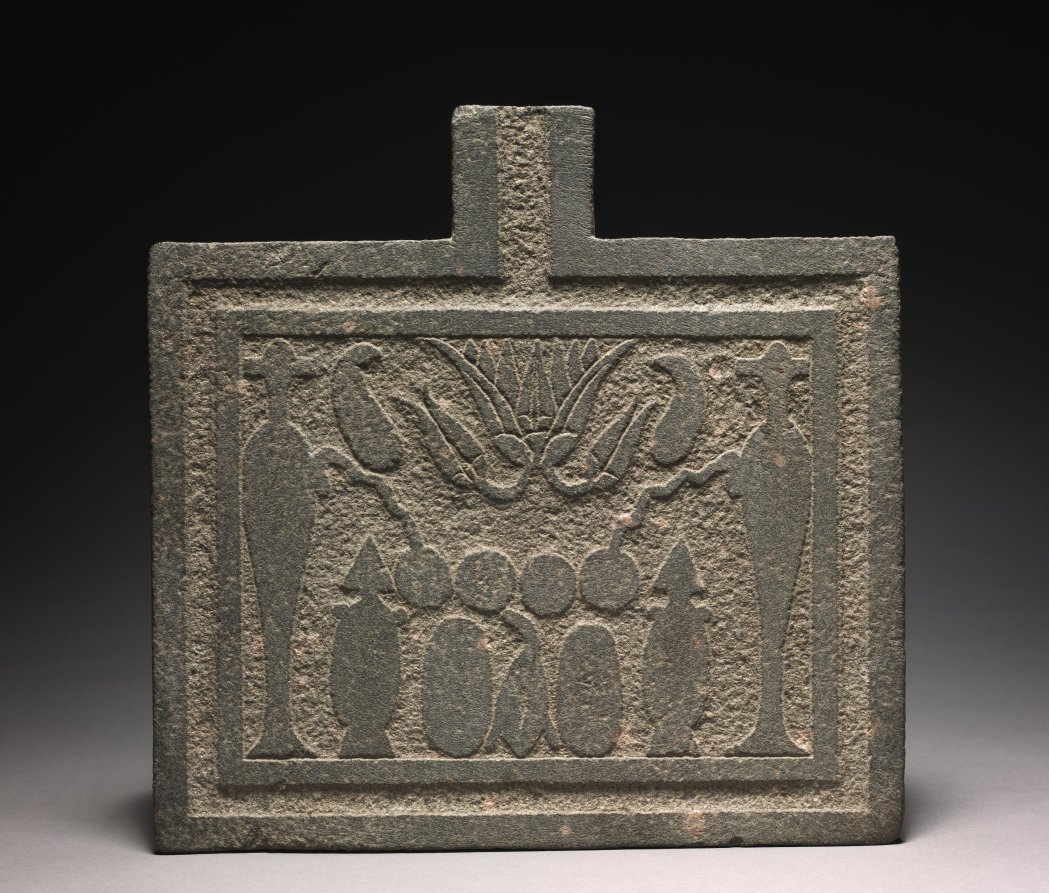
Offering Table (305–30 BCE) is in the Cleveland Museum of Art collection.
The work and its context
The museum's open-access catalogue describes the work:
Offering tables were used in ancient Egyptian funerary rituals to create a connection between the realms of the living and the dead. Often located near or inside tombs, the table was placed flat in front of ka statues, figures designed to contain the life force of the dead, with the carved surface facing up. Water would be poured over the table, sustaining the dead with vitality. The carved relief displays images of libation jars, beer jars, fruit, bread, cucumbers, a trussed fowl, and a lotus flower. These foods were associated with the diet of the gods, emphasizing the deceased’s desire to become divine in the afterlife.
Object facts
- Title: Offering Table
- Date: 305–30 BCE
- Culture: Egypt, Greco-Roman period (332 BCE–395 CE), Ptolemaic dynasty (305–30 BCE)
- Type: Sculpture
- Technique: granodiorite
- Dimensions: Overall: 34.6 x 35.2 x 7.2 cm (13 5/8 x 13 7/8 x 2 13/16 in.)
- Collection: Egypt - Ptolemaic Dynasty
- Department: Egyptian and Ancient Near Eastern Art
- Accession number: 1914.655
A detail from the museum
On offering tables made in earlier time periods, the channel for water usually connects to the main carved surface.
Collection credit
Gift of the John Huntington Art and Polytechnic Trust
Further reading listed by the museum
- Berman, Lawrence M., and Kenneth J. Bohač. Catalogue of Egyptian Art: The Cleveland Museum of Art. Cleveland, OH: Cleveland Museum of Art, 1999
View the collection record
See the museum's photographs and full catalogue entry. Catalogue text is reproduced from the Cleveland Museum of Art's open-access data, with HTML formatting removed. This object and its supplied image are designated CC0.
Sources
More in Lifestyle
Keep reading


