Oil Bottle (1100s–1200s): Art, History and Details
Oil Bottle at the Cleveland Museum of Art: 1100s–1200s, celadon ware. Explore the work's context, creator attribution and collection history.
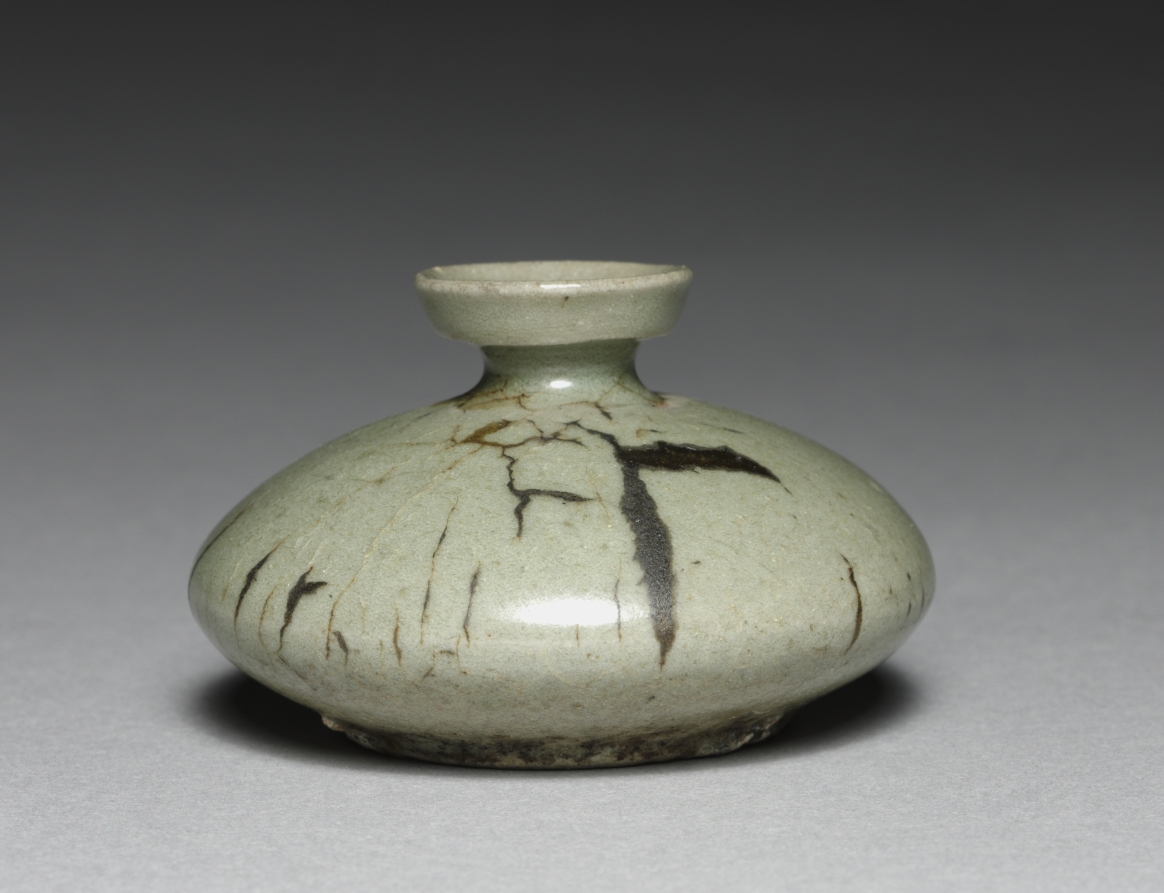
Oil Bottle (1100s–1200s) is in the Cleveland Museum of Art collection.
The work and its context
The museum's open-access catalogue describes the work:
Celadons, spoons, seals, and bronze mirrors were the most common burial objects in tombs during the Goryeo period (918–1392). Once used to contain oil treatment for hair, this little celadon bottle was one of the standard goods that furnished elites' tombs.
Object facts
- Title: Oil Bottle
- Date: 1100s–1200s
- Culture: Korea, Goryeo dynasty (918–1392)
- Type: Ceramic
- Technique: celadon ware
- Dimensions: Outer diameter: 7.4 cm (2 15/16 in.); Overall: 4.6 cm (1 13/16 in.)
- Collection: Korean Art
- Department: Korean Art
- Accession number: 1928.153
A detail from the museum
This bottle was used to contain oil treatment for hair.
Collection credit
Gift of John L. Severance
Further reading listed by the museum
- Goryeo Dynasty: Korea's Age of Enlightenment, 918-1392. San Francisco: Asian Art Museum, 2003.
- Tajima, Mitsuru, Wil Lautenschlager, and Kawanishi Noriko. Celadons of the Koryŏ court = Kōrai ōchō : hishoku seiji no kirameki. Tokyo: London Gallery, 2010.
- Goryeo: The Glory of Korea [대고려, 그 찬란한 도전]. Seoul: National Museum of Korea, 2018.
View the collection record
See the museum's photographs and full catalogue entry. Catalogue text is reproduced from the Cleveland Museum of Art's open-access data, with HTML formatting removed. This object and its supplied image are designated CC0.
Sources
More in Lifestyle
Keep reading