Ornament with Dance of the Lovers (c. 1490): Art, History and Details
Ornament with Dance of the Lovers at the Cleveland Museum of Art: c. 1490, engraving. Explore the work's context, creator attribution and collection history.
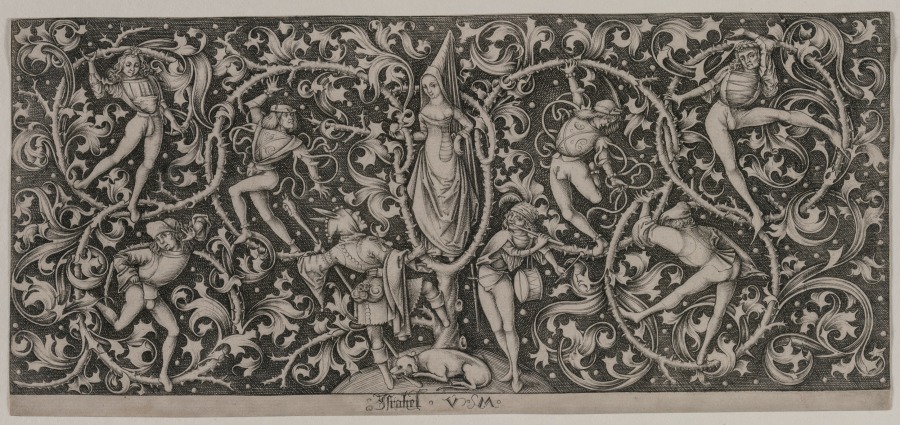
Ornament with Dance of the Lovers (c. 1490) is in the Cleveland Museum of Art collection. The museum's creator attribution is Israhel van Meckenem (German, c. 1440–1503).
The work and its context
The museum's open-access catalogue describes the work:
In this image, the competitive nature of love and sexual desire plays out on treacherously thorned vines that block the young suitors from their ultimate prize, the elegant lady in the center. Given the presence of two musicians, the male suitors may be performing a type of folk dance, known as a Morris dance, which was popular in courtly circles at the time, and which relates, as well, to courtly love poetry performed by troubadours (lyrical poets of the Middle Ages).
Object facts
- Title: Ornament with Dance of the Lovers
- Date: c. 1490
- Creator attribution: Israhel van Meckenem (German, c. 1440–1503)
- Culture: Germany
- Type: Print
- Technique: engraving
- Dimensions: Sheet: 12.1 x 26.8 cm (4 3/4 x 10 9/16 in.)
- Collection: PR - Engraving
- Department: Prints
- Accession number: 1952.532
A detail from the museum
Ornament prints such as this were often used by other artists and craftsmen as source material for motifs on decorative arts or furniture.
Collection credit
John L. Severance Fund
View the collection record
See the museum's photographs and full catalogue entry. Catalogue text is reproduced from the Cleveland Museum of Art's open-access data, with HTML formatting removed. This object and its supplied image are designated CC0.
Sources
More in Lifestyle
Keep reading