Orpheus and Eurydice (recto); Figure Studies (verso) (c. 1761): Art, History and Details
Orpheus and Eurydice (recto); Figure Studies (verso) at the Cleveland Museum of Art: c. 1761, Black and gray chalks on cream laid paper. Explore the work's context, creator attribution and collection history.
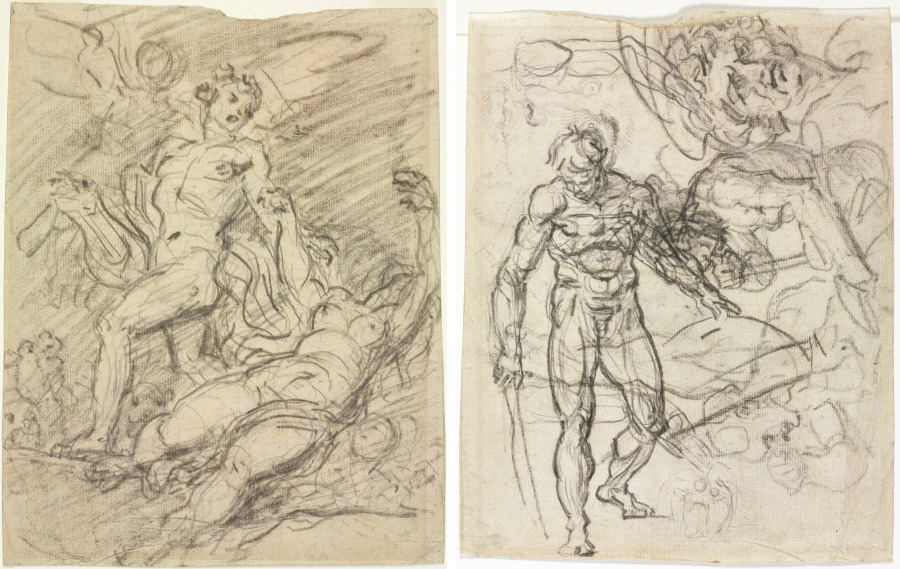
Orpheus and Eurydice (recto); Figure Studies (verso) (c. 1761) is in the Cleveland Museum of Art collection. The museum's creator attribution is Jean-Honoré Fragonard (French, 1732–1806).
The work and its context
The museum's open-access catalogue describes the work:
Quick drawings could serve a variety of purposes, and it is not always clear today why an artist created a particular sketch. This one may record a painting Fragonard saw during a journey to Italy, or capture an idea he was considering for a painting of his own. Orpheus, identified by the lute, grasps for his love Eurydice as she is pulled down into Hades. The snarling animals near his feet may represent Cerberus, the multiheaded guard dog of the underworld.
Object facts
- Title: Orpheus and Eurydice (recto); Figure Studies (verso)
- Date: c. 1761
- Creator attribution: Jean-Honoré Fragonard (French, 1732–1806)
- Culture: France
- Type: Drawing
- Technique: Black and gray chalks on cream laid paper
- Dimensions: Sheet: 28.9 x 22.7 cm (11 3/8 x 8 15/16 in.)
- Collection: DR - French
- Department: Drawings
- Accession number: 2009.152
Collection credit
Gift of Joseph F. McCrindle
View the collection record
See the museum's photographs and full catalogue entry. Catalogue text is reproduced from the Cleveland Museum of Art's open-access data, with HTML formatting removed. This object and its supplied image are designated CC0.
Sources
More in Lifestyle
Keep reading