Ostracon: Ramesses II Suckled by a Goddess (c. 1279–1213 BCE): Art, History and Details
Ostracon: Ramesses II Suckled by a Goddess at the Cleveland Museum of Art: c. 1279–1213 BCE, painted limestone. Explore the work's context, creator attribution and collection history.
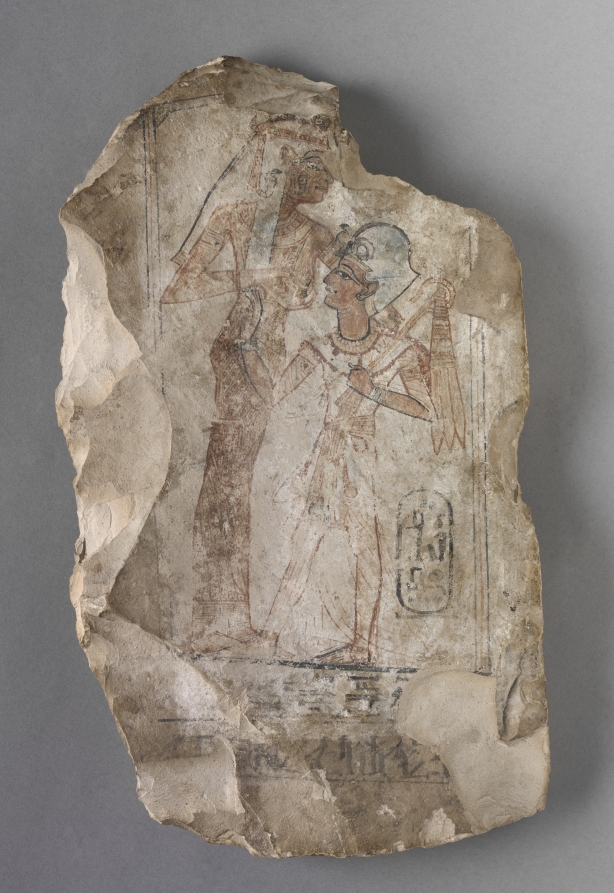
Ostracon: Ramesses II Suckled by a Goddess (c. 1279–1213 BCE) is in the Cleveland Museum of Art collection.
The work and its context
The museum's open-access catalogue describes the work:
Ostraca (singular, ostracon) are natural limestone flakes, common to the region of Thebes. The ancient Egyptians who lived there, particularly the artisans of the royal tombs, used them extensively as writing or drawing surfaces, both for practice and for instruction. Some are almost finished works of art; others are clearly sketches. Whether passing idle time or practicing their technique, these pieces provide a rare look at an ancient artist at work. This ostracon is decorated with a scene of the king suckled by a goddess. Although his body is that of an adult, the king (identified by the inscriptions as Ramesses II) appears child size. The goddess wears a long garment of vulture's wings--she could be any of a number of protective mother or sky goddesses.
Object facts
- Title: Ostracon: Ramesses II Suckled by a Goddess
- Date: c. 1279–1213 BCE
- Culture: Egypt, New Kingdom (1540–1069 BCE), Dynasty 19, reign of Ramesses II (1279–1213 BCE)
- Type: Sculpture
- Technique: painted limestone
- Dimensions: Overall: 31.2 x 18.2 x 3.3 cm (12 5/16 x 7 3/16 x 1 5/16 in.)
- Collection: Egypt - New Kingdom
- Department: Egyptian and Ancient Near Eastern Art
- Accession number: 1987.156
A detail from the museum
The artisans who carved the tombs in the cemeteries lived in a tiny community not far from their workplace.
Collection credit
Given in honor of James N. Sherwin, Trustee 1957-1971
Further reading listed by the museum
- Brunner-Traut, Emma. Die altägyptischen Scherbenbilder (Bildostraka) der Deutschen Museen und Sammlungen. Wiesbaden: Franz Steiner, 1956.
- Sotheby's (Firm). Antiquities and Islamic Works of Art, with Property from the Joseph Ternbach Collection. 1987.
- Turner, Evan H. "The Year in Review for 1987." The Bulletin of the Cleveland Museum of Art 75, no. 2 (1988): 30-71.
View the collection record
See the museum's photographs and full catalogue entry. Catalogue text is reproduced from the Cleveland Museum of Art's open-access data, with HTML formatting removed. This object and its supplied image are designated CC0.
Sources
More in Lifestyle
Keep reading