Ōtsu-e Nirvana of the Buddha (Ōtsu-e Butsu Nehanzu) (1800s): Art, History and Details
Ōtsu-e Nirvana of the Buddha (Ōtsu-e Butsu Nehanzu) at the Cleveland Museum of Art: 1800s, hanging scroll; ink and color on paper. Explore the work's context, creator attribution and collection history.
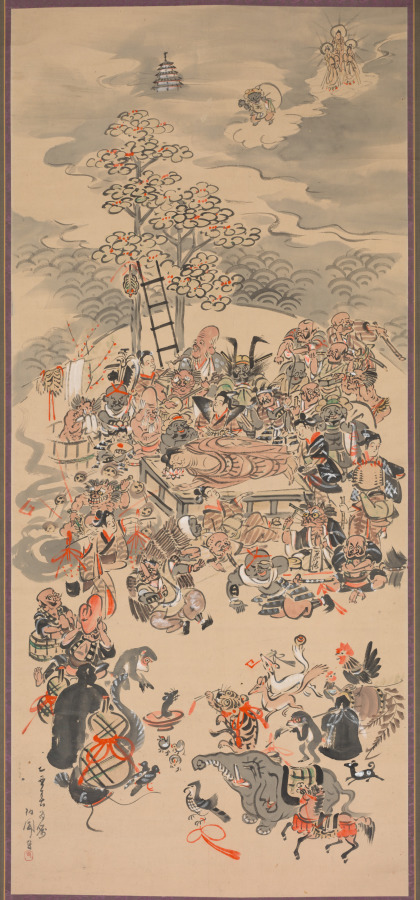
Ōtsu-e Nirvana of the Buddha (Ōtsu-e Butsu Nehanzu) (1800s) is in the Cleveland Museum of Art collection. The museum's creator attribution is Hakuen (Japanese, active 1850–1870).
The work and its context
The museum's open-access catalogue describes the work:
The painting parodies the traditional representation of this subject. The death of Buddha is actually the moment he achieves nirvana and escapes the endless cycle of death and rebirth. Hakuen transformed this serious moment (see The Death of the Buddha, CMA 1916.1141) into a lively parody with otsu-e subjects. Mourners surround the Buddha. An oni, who pretends to be a priest, holds his gong in the air as he beats his drums and chants prayers. The wisteria maiden appears at the left, bringing water to the mourners. Behind her is an oni in the guise of a thunder god beating his drums. The animals along the foreground represent other otsu-e characters and models. The painting would have amused 19th-century viewers familiar with the usual Buddhist imagery.
Object facts
- Title: Ōtsu-e Nirvana of the Buddha (Ōtsu-e Butsu Nehanzu)
- Date: 1800s
- Creator attribution: Hakuen (Japanese, active 1850–1870)
- Culture: Japan, Meiji period (1868–1912)
- Type: Painting
- Technique: hanging scroll; ink and color on paper
- Dimensions: Overall: 201.9 x 78.7 cm (79 1/2 x 31 in.)
- Collection: ASIAN - Hanging scroll
- Department: Japanese Art
- Accession number: 2016.306
Collection credit
Collection of Dr. Daniel Verne and Mitzie Verne
View the collection record
See the museum's photographs and full catalogue entry. Catalogue text is reproduced from the Cleveland Museum of Art's open-access data, with HTML formatting removed. This object and its supplied image are designated CC0.
Sources
More in Lifestyle
Keep reading
Related stories