Overmantel Mirror (c. 1740): Art, History and Details
Overmantel Mirror at the Cleveland Museum of Art: c. 1740, carved giltwood and glass. Explore the work's context, creator attribution and collection history.
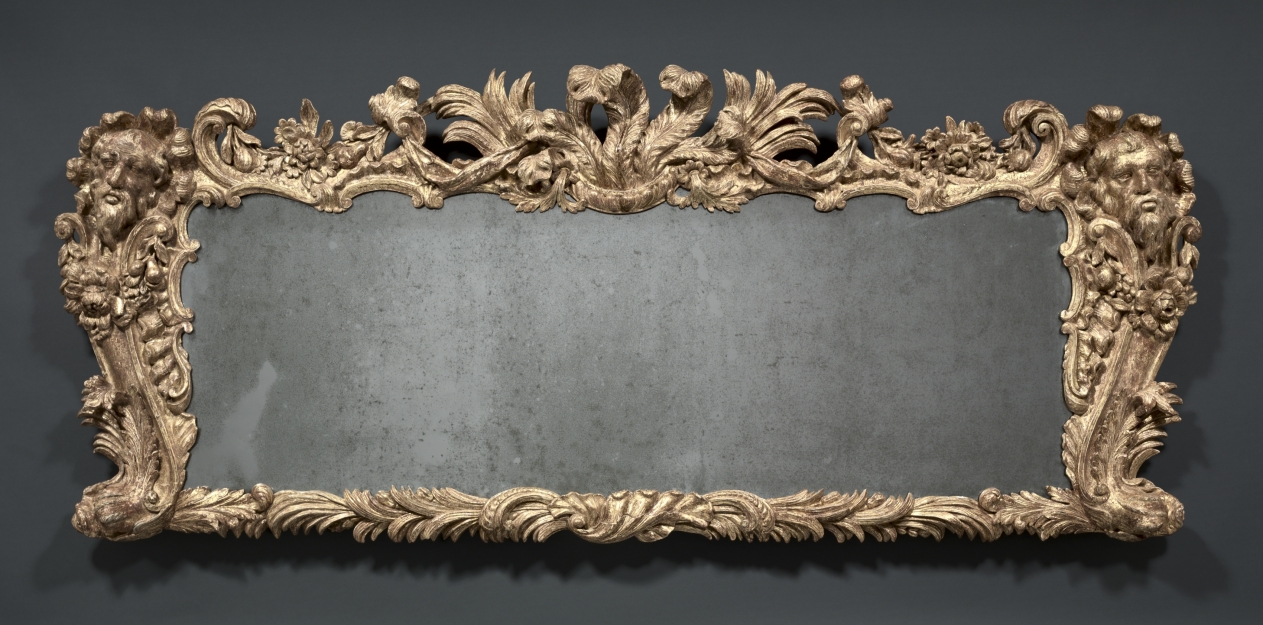
Overmantel Mirror (c. 1740) is in the Cleveland Museum of Art collection. The museum's creator attribution is James Pascall (British, c. 1697–1746).
The work and its context
The museum's open-access catalogue describes the work:
The carved ostrich feathers along the top of this mirror are a likely reference to the emblem of Frederick, Prince of Wales (1707–1751), the eldest son of George II (reigned 1727–1760), who pitted himself against his father and even set up a rival court of advisors in London. He saw himself as much more sophisticated and worldly, and in the world of design, harbored a love of all things French and modern, whereas George II was staunchly conservative and favored earlier historicist styles. The subtle carved plumes carved into this mirror suggest the political leanings of the owner who must have favored the prince over the king, a bold statement that would have been evident to anyone at the time. As it turns out, the rivalry dissipated when Frederick died prematurely at the age of 44, leaving his own eldest son to succeed his grandfather as George III in 1760.
Object facts
- Title: Overmantel Mirror
- Date: c. 1740
- Creator attribution: James Pascall (British, c. 1697–1746)
- Culture: England, 18th century
- Type: Furniture and woodwork
- Technique: carved giltwood and glass
- Dimensions: Overall: 78 x 186 cm (30 11/16 x 73 1/4 in.)
- Collection: Decorative Arts
- Department: Decorative Art and Design
- Accession number: 2006.3
A detail from the museum
In contrast to mirrors today, plate glass mirrors produced in Britain during the 1700s such as this one were backed with mercury and thin sheets of tin which give them their dark appearance.
Collection credit
Purchase from the J. H. Wade Fund
Further reading listed by the museum
- Droth, Martina, and Penelope Curtis. Taking Shape: Finding Sculpture in the Decorative Arts: An Exhibition Co-Organised by the Henry Moore Institute, Leeds and the J. Paul Getty Museum, Los Angeles, California. Leeds: Henry Moore Institute, 2009.
View the collection record
See the museum's photographs and full catalogue entry. Catalogue text is reproduced from the Cleveland Museum of Art's open-access data, with HTML formatting removed. This object and its supplied image are designated CC0.
Sources
More in Lifestyle
Keep reading