Page from a Shah-nama (Book of Kings) of Firdausi (Persian, about 934–1020) (1520–37): Art, History and Details
Page from a Shah-nama (Book of Kings) of Firdausi (Persian, about 934–1020) at the Cleveland Museum of Art: 1520–37, Gum tempera, ink, gold, and silver on paper. Explore the work's context, creator attribution and collection history.
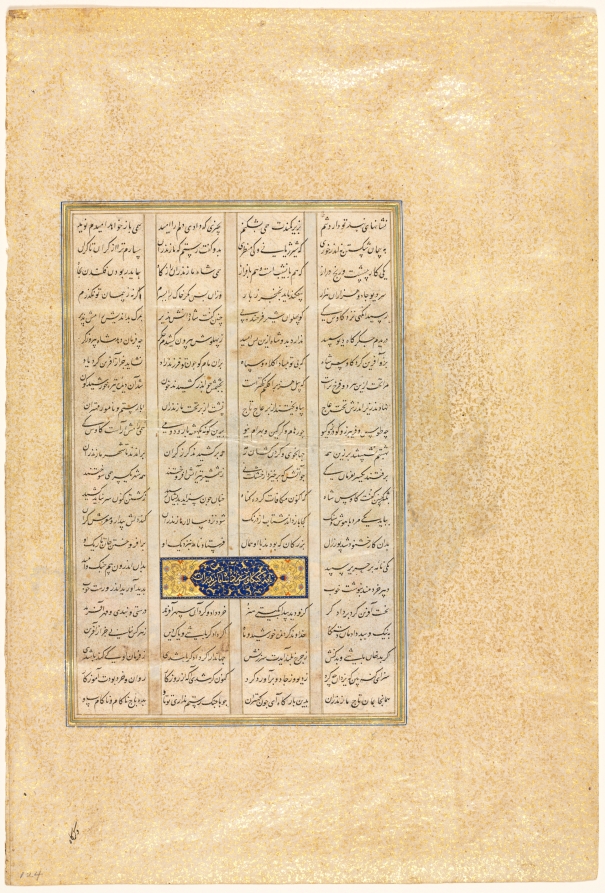
Page from a Shah-nama (Book of Kings) of Firdausi (Persian, about 934–1020) (1520–37) is in the Cleveland Museum of Art collection. The museum's creator attribution is Mir Musavvir (Iranian, c. 1510–1555).
The work and its context
The museum's open-access catalogue describes the work:
Begun at the end of the reign of Shah Ismail (reigned 1501–24), first king of the Safavid dynasty of Iran, this copy of the Shah-nama (Book of Kings) was completed during the reign of his son Shah Tahmasp. Unparalleled in scope and refinement, the book included 259 paintings by master artists in the royal workshop. Two calligraphers copied the text in an elegant, flowing nasta‘liq script. In 1568, Shah Tahmasp gave this book as a gift to the Ottoman sultan Selim II of Turkey.
Object facts
- Title: Page from a Shah-nama (Book of Kings) of Firdausi (Persian, about 934–1020)
- Date: 1520–37
- Creator attribution: Mir Musavvir (Iranian, c. 1510–1555)
- Culture: Iran, Tabriz, Safavid period (1501-1722)
- Type: Manuscript
- Technique: Gum tempera, ink, gold, and silver on paper
- Dimensions: Sheet: 47.5 x 32.2 cm (18 11/16 x 12 11/16 in.); Text area: 28.4 x 18.5 cm (11 3/16 x 7 5/16 in.)
- Collection: Islamic Art
- Department: Islamic Art
- Accession number: 1988.96.b
A detail from the museum
The 50,000 rhyming couplets of the Shahnama tell the story of ancient kings of Iran.
Collection credit
Leonard C. Hanna Jr. Fund
Further reading listed by the museum
- Franklin, David and C. Griffith Mann. Treasures from the Cleveland Museum of Art. Cleveland, OH: Cleveland Museum of Art, 2012.
View the collection record
See the museum's photographs and full catalogue entry. Catalogue text is reproduced from the Cleveland Museum of Art's open-access data, with HTML formatting removed. This object and its supplied image are designated CC0.
Sources
More in Lifestyle
Keep reading