Pallas Athena (c. 1595): Art, History and Details
Pallas Athena at the Cleveland Museum of Art: c. 1595, engraving. Explore the work's context, creator attribution and collection history.
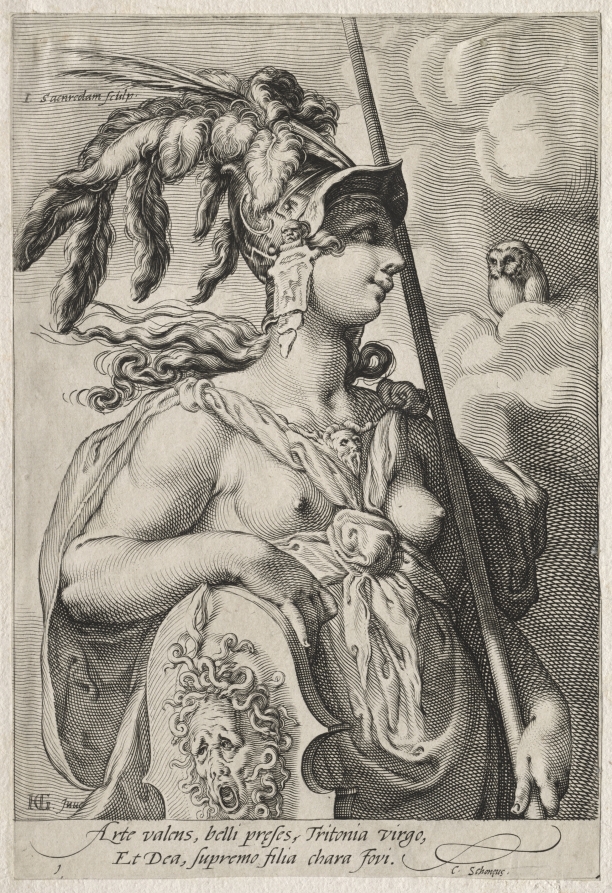
Pallas Athena (c. 1595) is in the Cleveland Museum of Art collection. The museum's creator attribution is Jan Saenredam (Dutch, 1565–1607); Hendrick Goltzius (Dutch, 1558–1617).
The work and its context
The museum's open-access catalogue describes the work:
Goltzius popularized a style of engraving with mesmerizing patterns of curving, tapering, and crisscrossing lines; it was especially appreciated in the late 1500s. Designed for his pupil Saenredam to engrave, these prints depict the three goddesses from the tale of The Judgment of Paris, in which each claimed the golden apple awarded to the most beautiful. Jupiter deferred judgment to Paris, a mortal esteemed for his fair-mindedness. Juno and Athena tried to bribe Paris with an empire and skill in war, but Venus made him an offer he could not resist: Helen, the world’s most beautiful woman. The peacock identifies Juno, queen of the gods and the jealous wife (and sister) of Jupiter. Clad in armor, Pallas Athena is the goddess of wisdom, the arts, and warfare; an owl is her sage companion. The presentation of the deities in separate prints suggests that viewers may also play Paris’s role and decide themselves which goddess the artists made most beautiful.
Object facts
- Title: Pallas Athena
- Date: c. 1595
- Creator attribution: Jan Saenredam (Dutch, 1565–1607); Hendrick Goltzius (Dutch, 1558–1617)
- Culture: Netherlands, 16th century
- Type: Print
- Technique: engraving
- Collection: PR - Engraving
- Department: Prints
- Accession number: 1993.205.1
Collection credit
John L. Severance Fund
View the collection record
See the museum's photographs and full catalogue entry. Catalogue text is reproduced from the Cleveland Museum of Art's open-access data, with HTML formatting removed. This object and its supplied image are designated CC0.
Sources
More in Lifestyle
Keep reading