Palm Wine Vessel (kuh mendu) (1900s): Art, History and Details
Palm Wine Vessel (kuh mendu) at the Cleveland Museum of Art: 1900s, Terracotta. Explore the work's context, creator attribution and collection history.
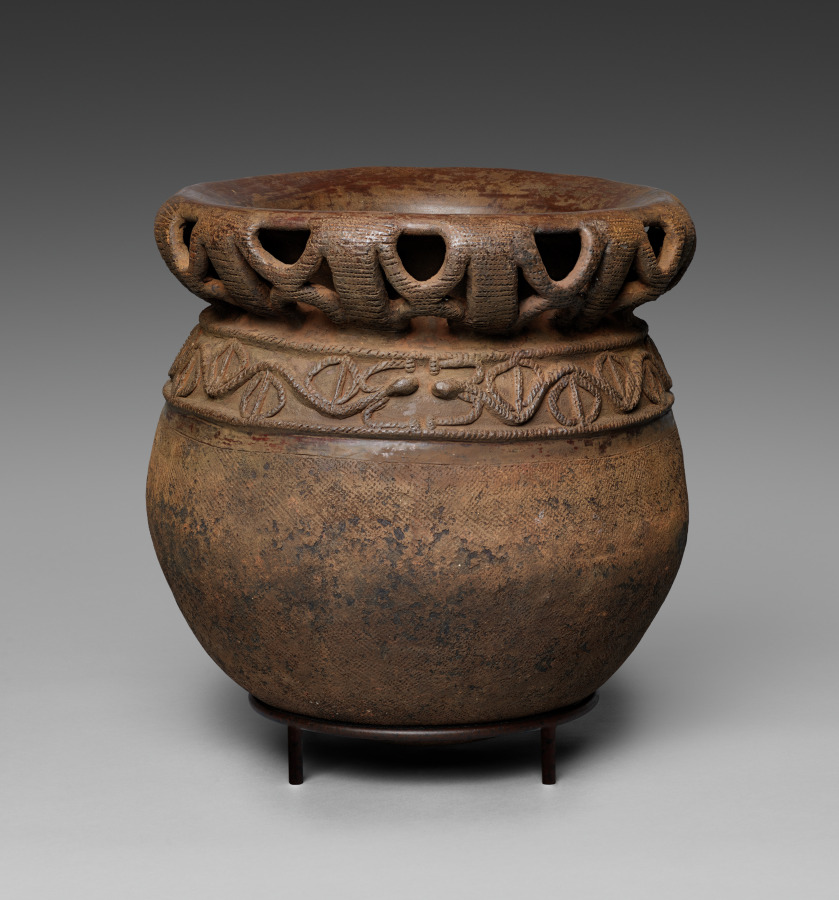
Palm Wine Vessel (kuh mendu) (1900s) is in the Cleveland Museum of Art collection.
The work and its context
The museum's open-access catalogue describes the work:
Made by a female potter nearly a century ago, this palm wine vessel represents past and present cultural practices in the Cameroon Grassfields (northwest and western Cameroon). Women in the pottery-producing centers of Babessi and Bamessing hand-built these vessels. Their process alludes to pregnancy, labor, and delivery. Passing knowledge from mother to daughter since at least the 1700s, making pottery is a female economic, social, and artistic contribution. Yet many motifs refer to royal or male power, such as the lizards on this vessel. Elegant palm wine vessels like this were appropriate for ritual and hospitality in Cameroon Grassfields royal courts.
Object facts
- Title: Palm Wine Vessel (kuh mendu)
- Date: 1900s
- Culture: Probably Babessi or Bamessing, Cameroon, Cameroon Grassfields-style pottery, unknown female ceramicist
- Type: Vessels
- Technique: Terracotta
- Dimensions: Overall: 45 cm (17 11/16 in.)
- Collection: African Art
- Department: African Art
- Accession number: 1998.94
A detail from the museum
Serving and sharing palm wine in decorated vessels like this is part of a larger food culture in the Cameroon Grassfields kingdoms that centers on ritual, hospitality, status, and diplomacy.
Collection credit
John L. Severance Fund
View the collection record
See the museum's photographs and full catalogue entry. Catalogue text is reproduced from the Cleveland Museum of Art's open-access data, with HTML formatting removed. This object and its supplied image are designated CC0.
Sources
More in Lifestyle
Keep reading