Paschal Candlestick (c. 1525–1550): Art, History and Details
Paschal Candlestick at the Cleveland Museum of Art: c. 1525–1550, bronze. Explore the work's context, creator attribution and collection history.
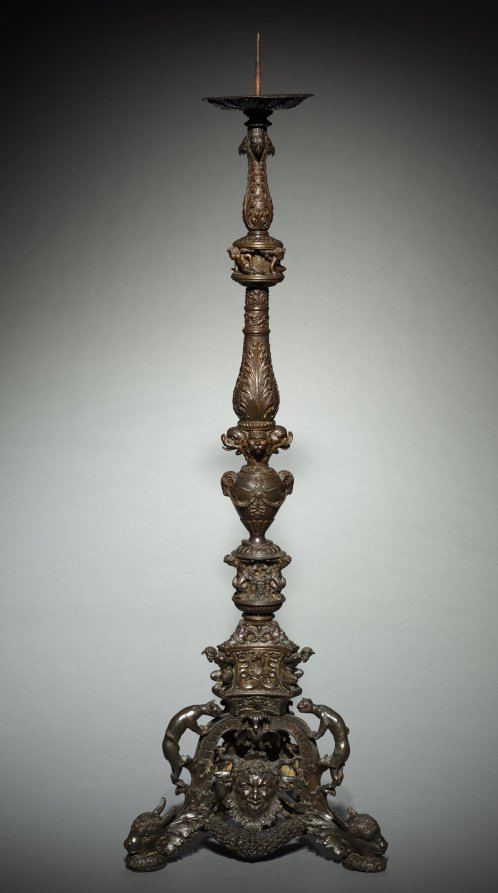
Paschal Candlestick (c. 1525–1550) is in the Cleveland Museum of Art collection.
The work and its context
The museum's open-access catalogue describes the work:
In Roman Catholic practice, a large candlestick holds the Paschal Candle, blessed and lit for the first time on Easter eve, then used on significant occasions throughout the year. Despite its religious function, the decorations here are entirely secular-ranging from panthers and bound satyrs to the heads of raptors and goats. These elements derive from ancient Roman sculpture and were especially popular among intellectuals in northern Italy, who were actively exploring connections among pagan traditions, ancient philosophy, and Christianity.
Object facts
- Title: Paschal Candlestick
- Date: c. 1525–1550
- Culture: Northern Italy, possibly Padua, 16th century
- Type: Sculpture
- Technique: bronze
- Dimensions: Overall: 123.2 x 41 x 44 cm (48 1/2 x 16 1/8 x 17 5/16 in.)
- Collection: Sculpture
- Department: European Painting and Sculpture
- Accession number: 1942.802
Collection credit
Bequest of John L. Severance
Further reading listed by the museum
- Catalogue of the John L. Severance Collection: Bequest of John L. Severance, 1936. [Cleveland, Ohio]: Cleveland Museum of Art, 1942.
- Milliken, William M., Gertrude Underhill, and Jean Mailey. "Department of Decorative Arts." The Bulletin of the Cleveland Museum of Art 29, no. 9 (November 1942): 137-151.
- Milliken, William. "Italian Renaissance Bronzes." The Bulletin of the Cleveland Museum of Art 34, no. 4 (April 1947): 64-68.
View the collection record
See the museum's photographs and full catalogue entry. Catalogue text is reproduced from the Cleveland Museum of Art's open-access data, with HTML formatting removed. This object and its supplied image are designated CC0.
Sources
More in Lifestyle
Keep reading